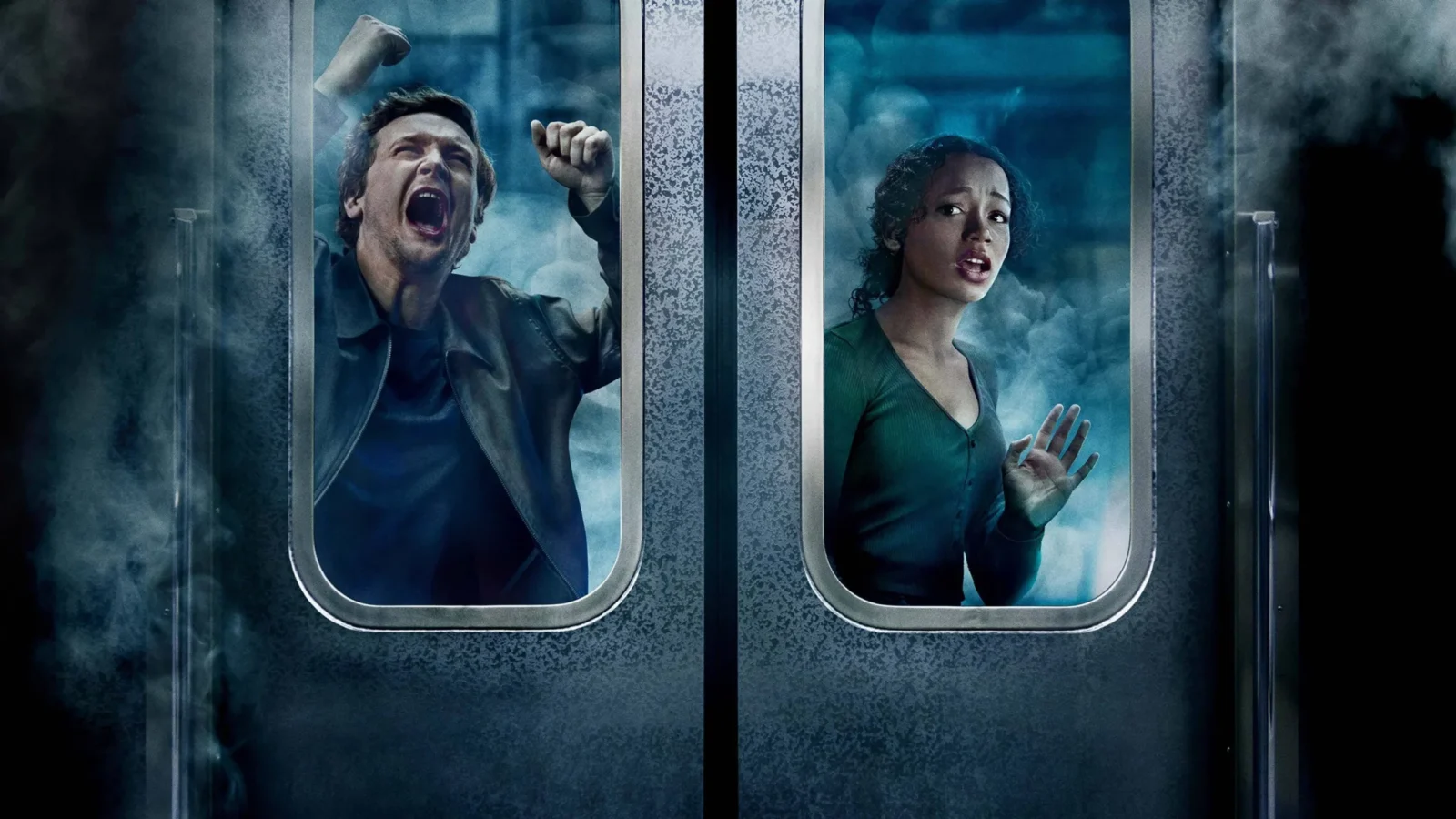

- Title: Escape Room: Tournament of Champions (2021)
- Director: Adam Robitel
- Adam Robitel’s horror director filmography
- Writers: Will Honley, Maria Melnik, Daniel Tuch, Oren Uziel (screenplay); Christine Lavaf, Fritz Böhm (story); Bragi F. Schut (based on characters created by)
- Cast: Taylor Russell, Logan Miller, Thomas Cocquerel, Indya Moore, Holland Roden, James Frain, Carlito Olivero, Isabelle Fuhrman
- Distribution: Sony Pictures/Columbia Pictures
- Streaming: Netflix
- Review by: Mother of Movies
This review discusses plot mechanics, character fates, and puzzle specifics. If you haven’t played along yet, maybe skip ahead, or don’t. Your survival, your call.
When the Escape Room Becomes a Rat Race
The Escape Room franchise thrives on a simple premise: throw strangers into elaborate death traps, watch them squirm, and see who’s smart (or lucky) enough to survive. It’s Saw meets Cube with a corporate sponsor, and somehow, it works. Escape Room: Tournament of Champions doubles down on that formula, reuniting survivors Zoey (Taylor Russell) and Ben (Logan Miller) as they’re dragged back into Minos Corporation’s sadistic games, because trauma isn’t complete without a sequel.
This time, the stakes are allegedly higher. The survivors aren’t just fighting for their lives; they’re fighting each other, or at least, that’s what the title suggests. In reality, it’s less Hunger Games and more “let’s see who can solve a Rubik’s Cube while drowning in quicksand.” The film leans into its own self-awareness, with characters openly acknowledging the repetitive nightmare they’re trapped in. It’s meta without being obnoxious, a rare feat in horror sequels that usually mistake cleverness for depth.
Puzzles, Panic, and Predictability
The opening fifteen minutes of Tournament of Champions feel like a jigsaw puzzle dumped on the floor, disorienting, fragmented, and slightly annoying if you haven’t revisited the original recently. Flashbacks to the first film and glimpses into the eccentric lives of the game designers (think Willy Wonka but with a body count) add context but also telegraph where the story’s headed. It’s like watching someone set up dominoes; you know they’re going to fall, you’re just waiting to see the pattern.
But once the film finds its rhythm, it delivers. The traps are inventive: electrocution grids, laser alarms, quicksand beaches, and hydrochloric acid rain, each one a baroque monument to human cruelty. Director Adam Robitel understands the appeal: audiences want to solve these puzzles alongside the characters, to feel that adrenaline spike when the timer hits zero. The pacing is relentless, a kinetic energy that rarely lets up, even when the script occasionally stumbles over its own ambition.
Where the Tournament of Champions falters is in its sanitization. The kills lack the visceral punch of Final Destination or the grotesque poetry of Saw. Deaths feel sterile, almost clinical, which undercuts the tension. When a character is vaporized by acid or crushed by shifting walls, it should hurt to watch. Instead, it feels like watching a video game cutscene, impressive, but emotionally distant. The film gestures toward horror without fully committing, like it’s afraid to alienate the PG-13 crowd.
Cast Chemistry and Character Casualties
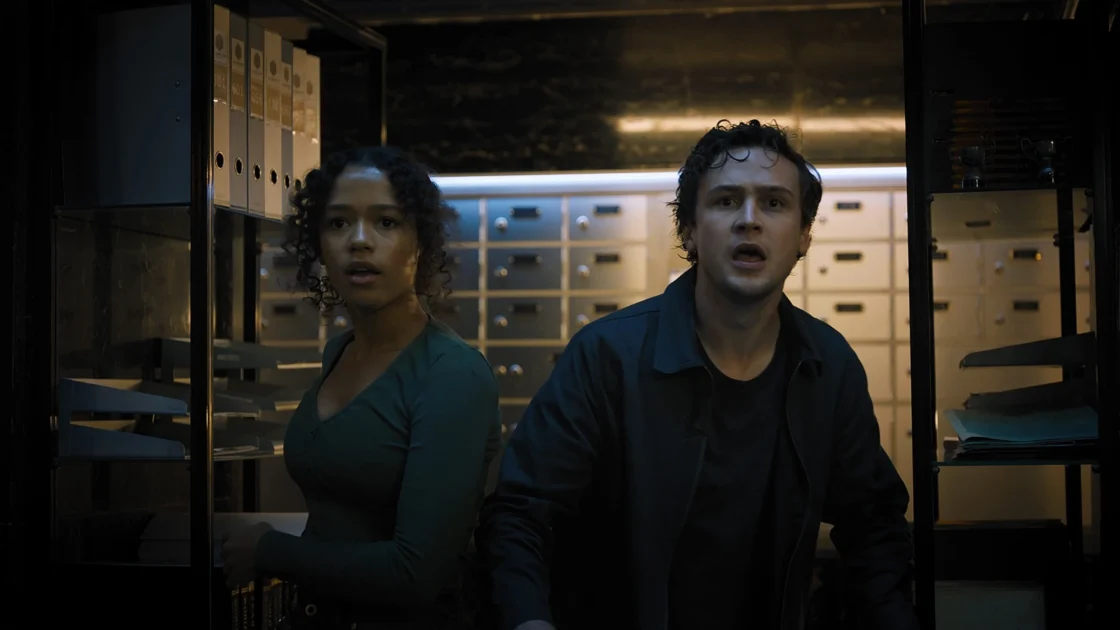
Taylor Russell and Logan Miller carry the emotional weight of the film with ease. Russell’s Zoey is driven by a need to expose Minos, to prove the nightmares are real, and her determination anchors the chaos. Miller’s Ben is the reluctant sidekick, still traumatized but loyal, a dynamic that works because both actors sell the exhaustion of being repeatedly hunted. Their chemistry is the glue holding the narrative together.
The supporting cast, however, is less memorable. Indya Moore, Holland Roden, and Isabelle Fuhrman do what they can with underwritten roles, but they’re essentially puzzle fodder, characters designed to die in increasingly elaborate ways. The film doesn’t give us time to care about them, which is a shame because the concept of a “tournament” implies rivalries, alliances, and betrayals. Instead, it’s a linear gauntlet where personalities blur into archetypes: the skeptic, the optimist, the wildcard.
That said, the ensemble commits fully to the absurdity. There’s no winking at the camera, no ironic detachment. When they’re panicking, you believe it. When they’re solving puzzles, you’re rooting for them. The film’s kinetic energy wouldn’t work without their investment, and to their credit, they make you care, even if only for the duration of their screen time.
The Minos Corporation: Corporate Evil as Spectator Sport
The real antagonist of Tournament of Champions isn’t the puzzles; it’s Minos Corporation, a shadowy cabal that treats human suffering like a reality show for the ultra-rich. It’s a blunt metaphor for late-stage capitalism, where the wealthy bet on lives like stocks, detached from consequence. The film flirts with this critique but never fully commits, opting instead for surface-level villainy. The game designers are eccentric weirdos, not fully realized characters, which makes them less threatening and more… annoying.
The extended cut’s alternate ending (more on that later) tries to deepen the mythology, revealing more about the Gamemaster and the corporation’s reach. It’s a tantalizing glimpse into a larger world, but it also highlights the theatrical cut’s reluctance to go all-in. The film wants to be a franchise, which means holding back just enough to justify a sequel. It’s frustrating, like being shown a locked door and told the key is sold separately.
Comparisons and Context: Where Does It Fit?
Tournament of Champions exists in a crowded subgenre, death game thrillers that blend horror, puzzle-solving, and social commentary. It shares DNA with:
- Saw (2004) – The blueprint for torture-puzzle horror, though with more philosophical weight.
- Cube (1997) – Low-budget, high-concept, and claustrophobic in the best way.
- Would You Rather (2012) – A darker, meaner take on survival games with genuine stakes.
- Circle (2015) – Psychological and stripped-down, forcing moral dilemmas over spectacle.
- Buy it from EB Games in Australia.
Compared to these, Tournament of Champions is slicker, faster, and less nihilistic. It’s a popcorn thriller dressed in horror’s clothes, prioritizing entertainment over existential dread. That’s not necessarily a flaw; it knows what it is and executes competently. But it lacks the raw edge that makes the best death game films linger long after the credits roll.
Escape Room 2 Extended Cut Alternate Ending
If you’re invested in the mythology, the extended cut is worth seeking out. If you just want a self-contained thriller, stick with the theatrical version. Either way, you’re getting a competent, occasionally thrilling ride that doesn’t quite reach the heights it’s aiming for.
Filmmaker Stamp: Adam Robitel
Adam Robitel has carved a niche in studio horror with a focus on high-concept premises and kinetic pacing. His previous work includes Insidious: The Last Key (2018) and The Taking of Deborah Logan (2014), the latter being a found-footage gem that showcased his ability to build dread. With the Escape Room franchise, Robitel leans into spectacle over atmosphere, prioritizing elaborate set pieces and puzzle mechanics. He’s a competent craftsman who understands genre mechanics, even if his films occasionally sacrifice depth for accessibility.
Rating & Verdict
Escape Room: Tournament of Champions is rated:
3.5 “Did I tell you my name? No…” out of 5
It’s a solid timepasser, entertaining, occasionally clever, but lacking the bite to make it truly memorable.
See the Mother of Movies list for “movies about escaping” or for other movies about being trapped, we recommend The Pool | Manhole 2023 | or Summit Fever next.
Slick Spectacle Over Substance
Tournament of Champions delivers kinetic puzzle-solving thrills but sanitizes the horror. It’s Final Destination meets Saw with the edges sanded off, entertaining, occasionally clever, but never truly terrifying.
Extended Cut for “Escape Room Tournament of Champions 2021.”
Alternate Ending to the Theatrical Version
The theatrical cut of Tournament of Champions ends on a cliffhanger, teasing Minos’s global reach and setting up future installments. The extended cut offers an alternate ending that dives deeper into the Gamemaster’s identity and motivations. It’s a fascinating “what if,” but it doesn’t fundamentally change the film’s trajectory. Both versions prioritize setup over resolution, which is either tantalizing or infuriating, depending on your tolerance for franchise-building.
The Extended Cut: A Different Ending, Same Problems
Escape Room 2.” I didn’t. Here it is if you’re dying to see if or if you didn’t know it existed. I will warn you, though, that this clip contains spoilers for “Escape Room: Tournament of Champions” if you haven’t watched it yet. In this video, there is more information about the GamesMaster and who he is.

Will There be an Escape Room 3?
The Tournament of Champions movie’s final scenes deliver the intense and thrilling conclusion that fans of this genre anticipate. It leaves a lasting impact and sets the stage for an exciting potential third installment of the Escape Room series. As a fan, I am always eager to experience more of these well-crafted films, and I hope the filmmakers consider catering to their audience by creating an R-rated Escape Room 3. Director Robitel has expressed his abundance of ideas for the next film, which adds to the anticipation.
- “Escape Room Tournament of Champions cast includes Taylor Russell, Logan Miller, Thomas Cocquerel, Indya Moore, Holland Roden, James Frain, Carlito Olivero, and Isabelle Fuhrman.
- Production Companies: Columbia Pictures (presents), Original Film, Shaken Not Stirred
| Screenplay by | Storyline by |
| Will Honley | Christine Lavaf |
| Maria Melnik | Fritz Böhm |
| Daniel Tuch | |
| Oren Uziel |