
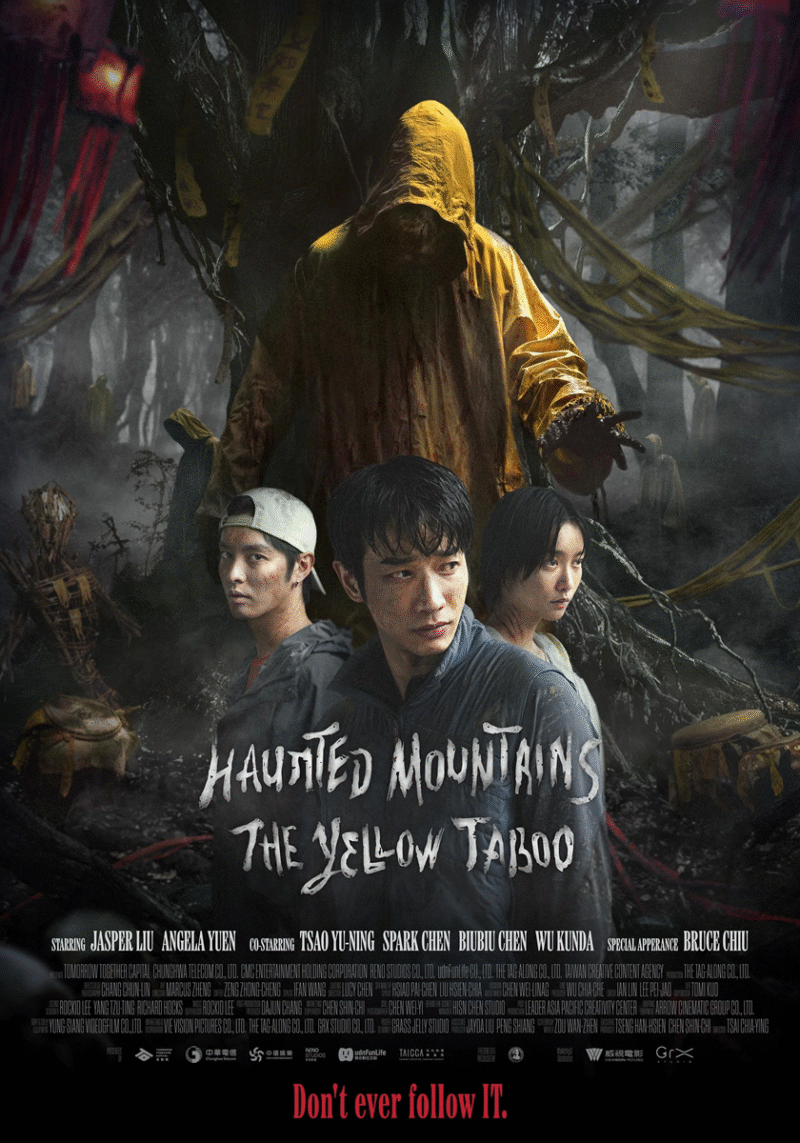
Film Title: Haunted Mountains: The Yellow Taboo | Review by: Mother of Movies for Fantasia International Film Festival 2025
Cast: Jasper Liu, Angela Yuen, Tsao Yu Ning
Director: Tsai Chia Ying
Writer: Zou Wan Zhen
Release: Taiwan, 2025
Skip to a Specific Section
This review contains detailed discussion of death sequences, ritual themes, and supernatural elements. No major ending reveals, but atmospheric details are explored. Continue reading if you’re comfortable with thematic analysis.
Taiwan’s Folk Horror Renaissance Finds Its Voice
There’s something genuinely unsettling about watching someone you love die repeatedly, especially when each death feels both inevitable and preventable. Tsai Chia Ying’s debut feature, rooted in one of Taiwan’s most persistent urban legends, transforms the familiar time-loop concept into something that feels uniquely Taiwanese, a meditation on guilt, unfinished business, and the weight of choices we can’t unmake.
Haunted Mountains: The Yellow Taboo opens with that peculiar brand of disorientation that only truly effective horror achieves. A man strips naked in misty mountains, approaches a house with a red door, and encounters the legendary figure in the yellow raincoat, Taiwan’s answer to folklore that’s been haunting hikers since the 1970s. It’s immediately clear that Chia Ying understands atmosphere over exposition, letting the mountain’s creaking rumbles and persistent fog do most of the talking.
What makes Haunted Mountains: The Yellow Taboo particularly compelling is how it weaves genuine Taiwanese mythology into a narrative structure that horror audiences will recognize. The Yellow Taboo, that mysterious figure who appears to lost hikers, wearing a yellow raincoat and bamboo hat, represents more than just another supernatural antagonist. This is cultural storytelling that respects its source material while refusing to explain away its power through Western horror conventions.
Jasper Liu delivers a performance that anchors the film’s emotional core as Chen Jai-Ming, a man trapped in a horrific loop where his girlfriend Yu-Hsin (Angela Yuen) dies repeatedly in increasingly brutal ways. Liu, known for his work in “More Than Blue” (2018), brings a naturalistic desperation to the role that never feels performative. You believe his exhaustion, his growing panic, and eventually his terrible understanding that some cycles can only be broken through sacrifice.
The film’s central relationship dynamics prove more complex than initially apparent. The revelation that Yu-Hsin was originally in love with their friend An-Wei, the friend they left behind on that fateful hiking trip, adds layers of guilt and romantic tension that elevate this beyond simple supernatural thriller territory. Angela Yuen, notable from “Chilli Laugh Story” and “Fantasia” (2022), brings a vulnerability to Yu-Hsin that makes her repeated deaths genuinely painful to witness rather than mere plot devices.
Haunted Mountains: The Yellow Taboo When Folklore Meets Modern Filmmaking
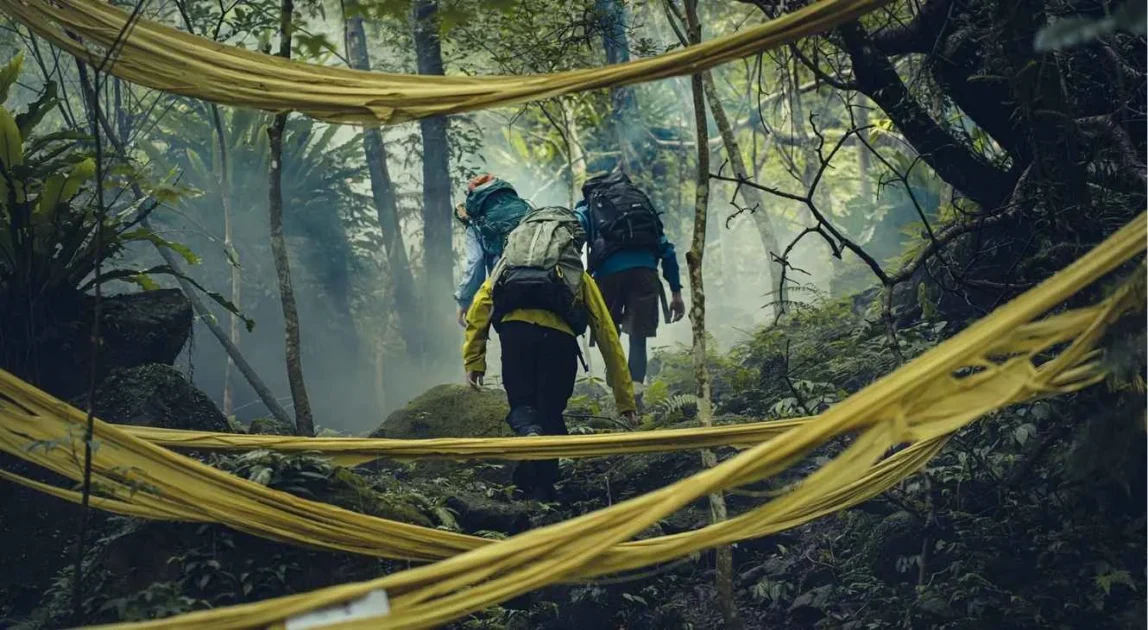
The mountain itself becomes a character under Chia Ying’s direction, with production design that emphasizes practical environments over digital enhancement. Those misty peaks, the blood-marked stones, the eerie hallways that seem to exist outside normal geography, everything feels tangible in ways that serve the film’s approach to supernatural horror. The recurring lens flares, like scattered dots across the frame, create visual continuity that subtly reinforces the cyclical nature of the narrative.
The ritual elements, particularly the cleansing ceremonies and the symbols carved into flesh, draw from authentic Taiwanese spiritual practices without falling into exploitation territory. When characters discuss visiting the temple to break the cycle, or when the master explains the mountain’s tragic history, it feels earned rather than convenient. The film respects its cultural roots while acknowledging that some mysteries resist easy resolution.
However, where the film occasionally stumbles is in its ambitious attempt to juggle multiple timeline reveals and character motivations. The connection between An-Wei’s death, the father’s ritual, and the ongoing supernatural attacks sometimes feels more intellectually constructed than emotionally resonant. Certain plot threads, particularly the exact mechanics of who performed which ritual when, remain frustratingly loose even after the film’s conclusion.
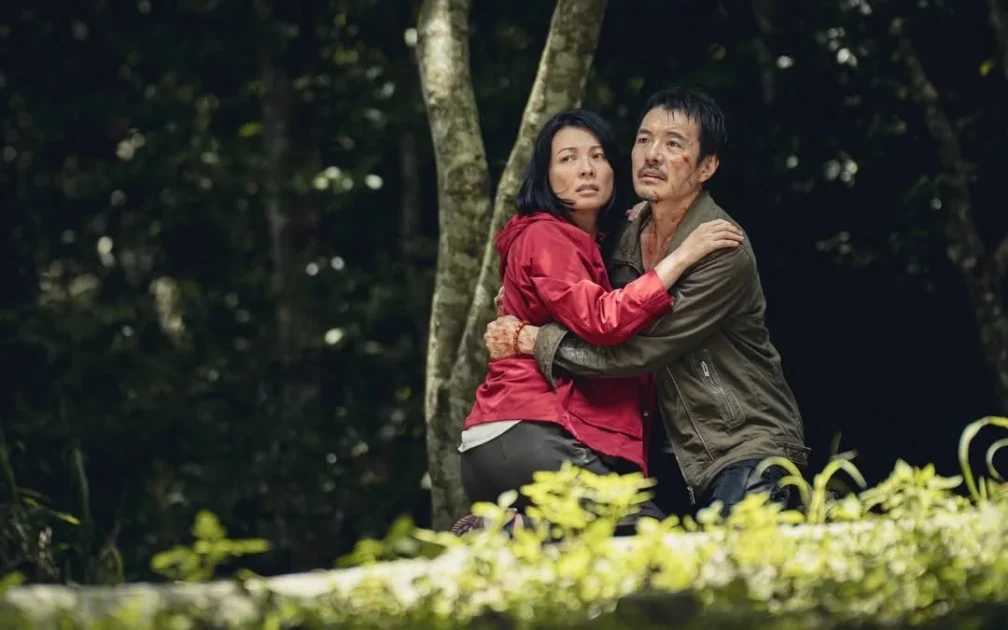
The Mandarin Happy Death Day That Almost Was
The comparisons to “Happy Death Day” are inevitable but somewhat reductive. While both films use repetitive death as their central conceit, Haunted Mountains grounds its horror in cultural specificity and emotional authenticity rather than genre self-awareness. This isn’t about cleverness or meta-commentary; it’s about the impossible weight of trying to save someone when the universe itself seems determined to take them away.
Tsao Yu Ning’s performance as An-Wei, revealed through flashbacks and the film’s climactic time-reset, provides crucial context for understanding the guilt driving the supernatural cycle. His presence haunts the film even when he’s not on screen, representing all the ways our past choices continue to shape present realities.
The film’s exploration of masculine guilt, how men process responsibility for protecting the people they love, feels particularly relevant. Chen’s journey from helpless witness to active participant in breaking the cycle mirrors real psychological processes around trauma and survivor’s guilt. When he finally understands that saving Yu-Hsin requires accepting his own sacrifice, the emotional payoff feels earned despite some narrative inconsistencies.
What the Internet is Saying
Critics are calling Haunted Mountains: The Yellow Taboo a standout in Taiwan’s growing horror reputation, with The Blogging Banshee praising it as “a frightening supernatural mystery sure to make audiences pay attention to Taiwanese horror.” However, But Why Tho? notes the film “gets lost in the weeds” toward its conclusion, while Josh at the Movies describes it as “atmospheric and haunting” with equal measures of scares and emotional trauma. The film’s exploration of Taiwan’s legendary Mountain Gremlins folklore from the 1970s has horror fans particularly intrigued, with many comparing its time-loop structure to Western horror conventions while appreciating its distinctly Taiwanese cultural roots.
Haunted Mountains: The Yellow Taboo is rated
3.5 Yellow raincoats that point toward paths better left unfollowed out of 5
Produced by The Tag Along
Where to Stream and Watch Haunted Mountains: The Yellow Taboo
The Art is Alive Festival Wrap-Up 2025 might include a film that piques your interest. Visit all the info Mother of Movies compiled via this link.
Haunted Mountains: The Yellow Taboo
Director: Chia-Ying Tsai
Date Created: 2025-07-26 13:21
3.5
