Drop, directed by Christopher Landon, commences with an ambiguous scene: a woman, later identified as Violet, wakes with severe facial trauma, confronted by a man wielding a knife, a teddy bear on the floor hinting at the presence of children. The narrative then cuts to what appears to be an earlier timeline, showing Violet as a counselor. Her sister, Jen, and son, Toby, are introduced, with references to a past traumatic incident involving a man named “Blake,” strongly implying him to be the assailant from the opening.
First Date, Fatal Drops: The Digital Onslaught of Drop
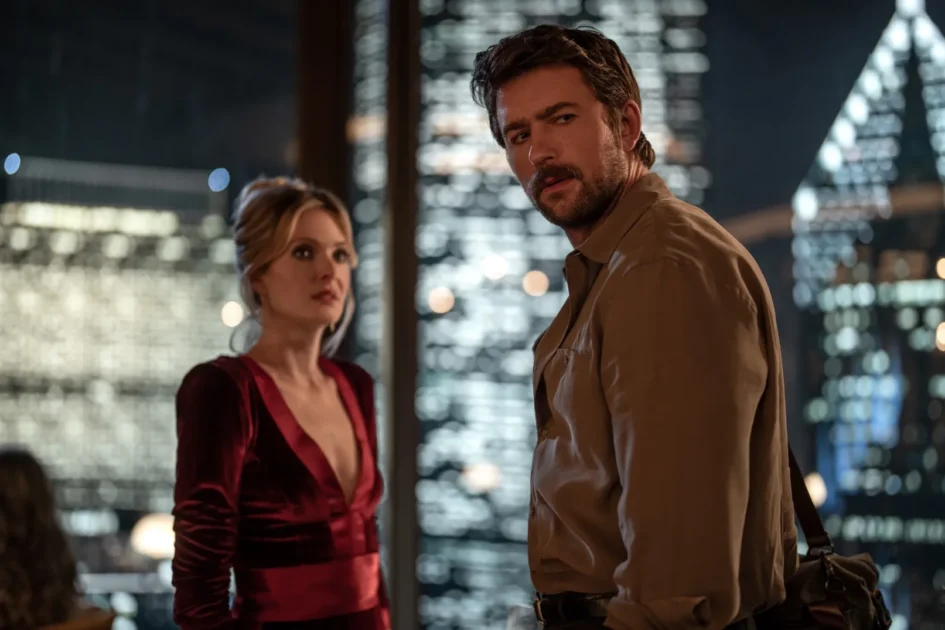
Violet embarks on her first date in years, heading to a posh Chicago restaurant called Palate. Ominous music accompanies her gaze up at the skyscraper where the restaurant is located. At the bar, she receives a weird text message, and her date, Henry (Brandon Sklenar), arrives, seemingly familiar with airdropped messages. These digital intrusions rapidly escalate, becoming personal and menacing, with the villain demonstrating access to her home and threatening her son.
This high-concept thriller, produced by genre heavyweights Blumhouse and Platinum Dunes, initially promises a slick, modern suspense experience. However, while a dating adjacent app premise can effectively hook an audience, the significant challenge lies in sustaining plausibility and tension without resorting to increasingly absurd or contrived plot points. The film’s rapid descent into questionable narrative choices suggests it prioritizes the escalating gimmick over logical progression.
Psychological Playbook or Plot Hole Parade? Unraveling Drop’s Twists
But I digress…the initial veneer of psychological intrigue, however quickly devolves as the unseen tormentor, the “drop guy,” escalates his demands. The villain could be anywhere in the restaurant, and his methods become extreme and improbable. Between spy movie assassination attempts and most of the men hitting on Violet, to hacking security cameras and commencing a home invasion process, the unseen mastermind has his fingers in all the restaurant pies. This rapid escalation, however, pushes the narrative into outright absurdity, highlighted by glaring inconsistencies, such as the restaurant’s main phone line being cut without any discernible impact on its operations.
Violet’s date eventually becomes aware of something odd going on, but she is far too good-looking to bail on. So, Drop does what any thriller with a killer does, and the film’s short runtime takes a run at making everyone inside the high-rise eatery a suspect.
While thrillers thrive on escalating stakes, there is a critical line between high tension and outright silliness. When a plot demands increasingly implausible actions from the villain and relies on convenient plot holes, immersion gets shattered. Sure, it’s fun, but the tie-in of the film’s use of severe, real-world trauma like domestic violence and suicide as a superficial backstory, only to resolve the conflict with a farcical, unbelievable ending, trivializes the serious themes it introduces, leading to a problematic and “distasteful” viewing experience.
Visuals, Velocity, and Vomit: The Aesthetic and Aftertaste of Drop
Drop‘s visuals are modern and sparkly, but not unique. Text messages are prominently displayed on screen, a common contemporary cinematic device as opposed to the smaller text on a handheld screen, though this is far more practical. The effects are generally clean and do the job. The cinematography features sweet spots with certain angles and close-ups, and other pivots towards elements to provide clues without it seeping into the dialogue. As Violet solves the riddle, the frames shift to a conspiracy style, attempting to visually represent her unraveling of the plot.
The villain is suitably able, and the final act descends into a mess of shots, breakage, and fights. The cityscape is really quite something, however, and if I had to pick a background, this setting would be it. A subtle feminist theme runs its course and doesn’t demand too much.
Despite these refined technical elements, some critics found the film’s visuals to be “nastily composited,” lacking “visual pleasure”. This suggests that while the film might be technically competent in its effects, it fails to translate that into a consistently engaging or aesthetically pleasing visual experience for everyone who watched Drop.
The performances in Drop stand out mainly due to the cast’s assigned roles, with the waiter’s portrayal being a particular favorite. Meghann Fahy, as Violet, gets specific praise. She demonstrates the power of a strong performance to anchor a film, even one plagued by narrative issues. Fahy’s ability to ground the increasingly absurd plot is a critical element, preventing the film from completely spiraling into unwatchable territory. There’s nothing to suggest that a no-brainer movie night is not highly sought after for most.
The Drop’s Troubling Tether: Domestic Violence and Missed Opportunities
Drop received “good ratings as an early release” and grossed $28 million worldwide. Its critical reception is generally positive, with an 84% on Rotten Tomatoes, a Metacritic score of 65, and a CinemaScore of “B” from audiences.
Director Christopher Landon is known for horror films that often incorporate comedic elements, such as Happy Death Day, Freaky, and We Have a Ghost. The writers, Jillian Jacobs & Chris Roach, also penned Fantasy Island and Blumhouse’s Truth or Dare. When a director known for blending horror and comedy attempts a more “straight” thriller, the absence of the expected humor can make the absurdities of the plot more glaring and less forgivable.
If the film doesn’t fully commit to either a serious tone or a consistently comedic one, it risks falling into an awkward middle ground where its inherent ridiculousness isn’t balanced by wit or genuine tension. The jarring “comedy crash” at the very end feels unearned because the rest of the film played its premise straight.
Conclusion: The Aftermath and the Aftertaste
SPOILER Ending of Drop
Violet discovers a bug, confirming her family’s peril, and returns to the dinner table only to find another bug, realizing she is now a target. The film’s ambiguous opening, while designed to intrigue, struggles to provide satisfying answers or adequately justify the protagonist’s capabilities, particularly when it attempts to weave in past trauma without fully integrating it into the “why” of the extravagant plot.
Her successful murder of the pianist was a cool addition, but having him drop dead outside, given the first daters made me wonder why they didn’t have Violet say, “Oh, look over there!”While he died outside.
Violet’s attempt to poison her date culminates in a last-minute chicken-out by spilling her wine. The overarching agenda behind this elaborate scheme remains frustratingly loose, leaving a sense of detachment regarding why such an “extravagant” planner would target Violet, especially given her past trauma. Even more confusing is why her date wasn’t suspicious, given that he was carrying something so important on a date in the first place.
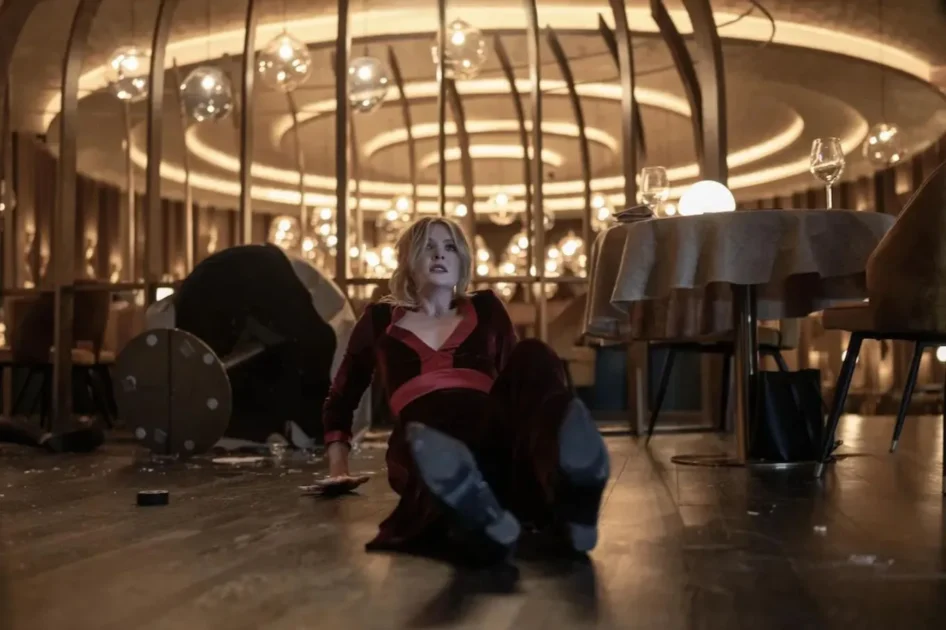
The climax was met with strong disapproval. I described it as an “OMG vomit.” It featured her son saving her while wearing pajamas and by driving a remote control car with a gun on it towards her as a hitman leans over her, ready to shoot.
A final “comedy crash” occurs when her sister, who miraculously survived, enters the hospital room with a “too soon” quip. Violet wakes up and checks her phone only to see a new message from the same number that started this whole mess. I do know that this type of thing is what fans of this team of people wait up for. But jamming it into the film’s final moments didn’t do it for me.
The film’s resolution suggests Violet was merely a “scapegoat in a conspiracy to kill the informant,” with the killer revealed to be a seemingly random acquaintance from the restaurant.
Drop (2025) — Action & Horror streaming on:
— Mother of Movies
Drop (2025) is rated
3 Truth or Dare in the digital dating era out of 5
- Director: Christopher Landon
- Writers: Jillian Jacobs, Chris Roach
- Main Cast: Meghann Fahy, Brandon Sklenar, Violett Beane, Jacob Robinson, Reed Diamond, Gabrielle Ryan, Jeffery Self, Ed Weeks, Travis Nelson
- Distribution: Universal Pictures
- Production Companies: Blumhouse, Platinum Dunes
- Release Date: March 9, 2025 (SXSW Premiere), April 11, 2025 (US Release)
- Film Title: Drop
- Review by: Mother of Movies
- For another movie with Christopher Landon’s involvement, watch: Heart Eyes
Drop was produced by Universal Pictures, Blumhouse, and Platinum Dunes, with key producers including Jason Blum and Michael Bay. It premiered at SXSW on March 9, 2025, and saw a US release on April 11, 2025.
“In ‘Drop,’ the only thing more unsettling than the digital torment is the film’s baffling decision to play its increasingly ridiculous premise with a straight face.”
– Mother of Movies
- Official Site: (More information via their Official Site)
- Movies with underdog characters – Clown N Out in the Valley / Jacker film series
Drop
Director: Christopher Landon
Date Created: 2025-03-09 20:10
3