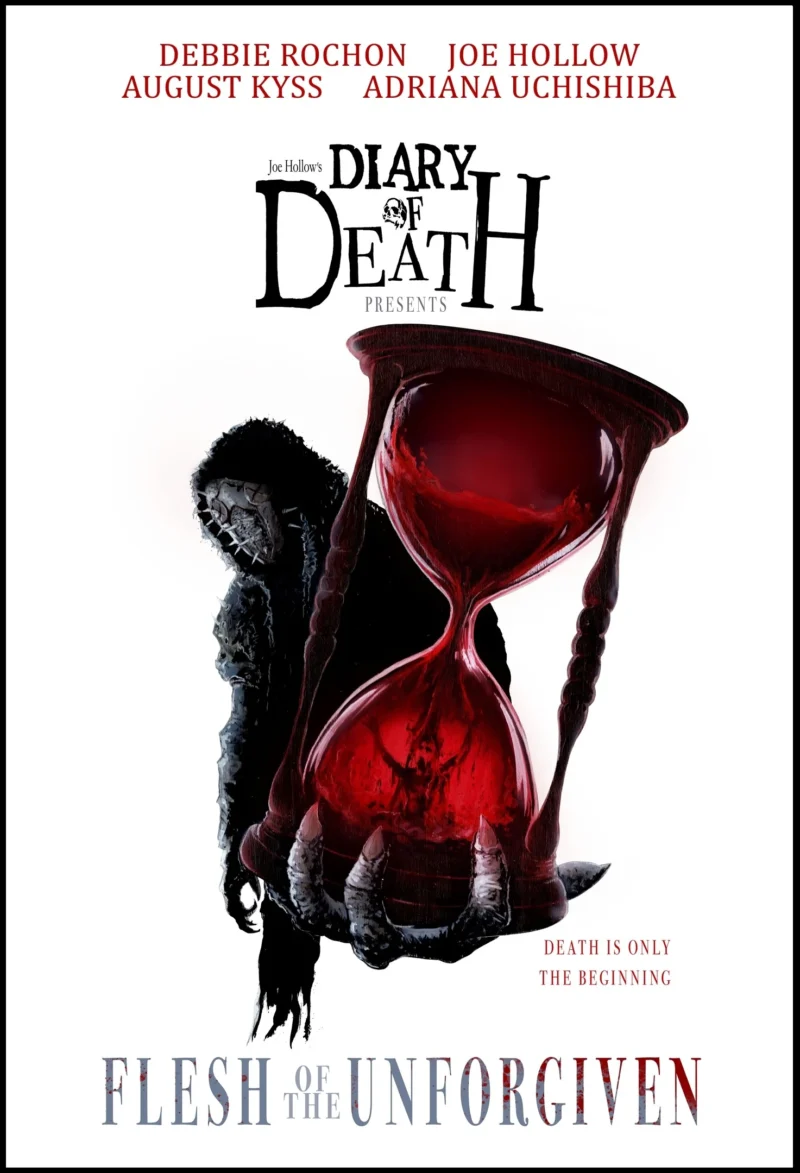
In the independent cinema landscape, some films arrive like a cryptic message in a bottle, and leave you to piece together the fragments. Joe Hollow’s Flesh of the Unforgiven is precisely that kind of experience, a micro-budget horror-thriller that dares to be as baffling as it is viscerally striking. At Mother of Movies, we champion the underseen and the underrated. While this film might test the limits of narrative cohesion, its raw ambition and commitment to its grim aesthetic are undeniably present.
Flesh of the Unforgiven Review: A Micro-Budget Horror That Redefines Chaotic Inspiration
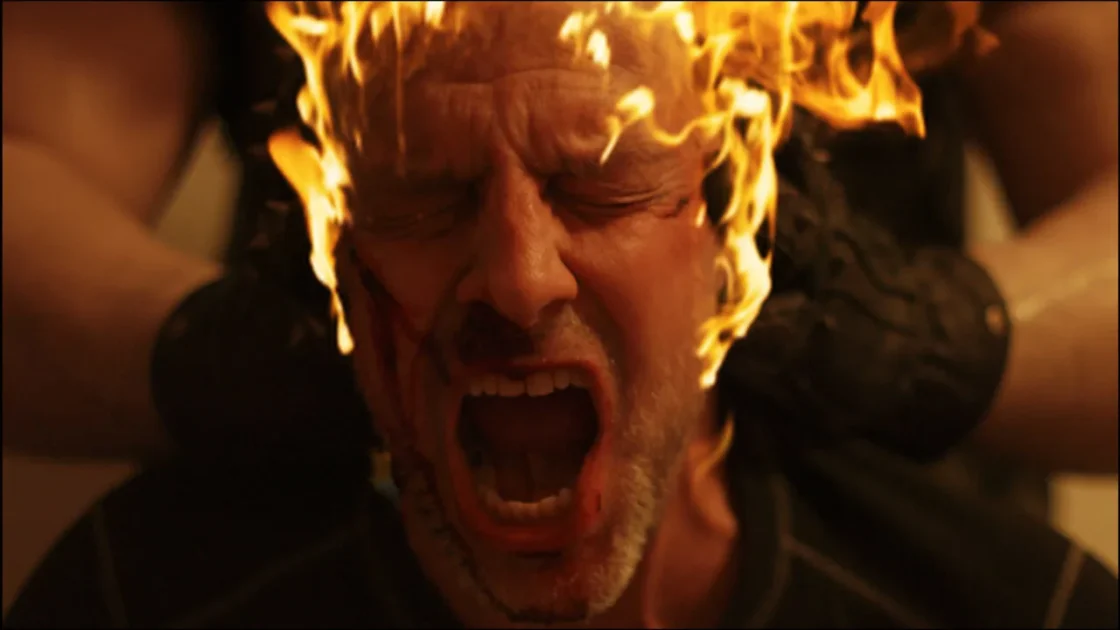
From the opening frames, it’s clear this isn’t a popcorn flick. Unsettling imagery, generous gore, and visuals that don’t always make sense on their own, but that feel intentional.
The makeup and set design hold up. A figure in black leather watching a woman in a bloody skin suit on TV sets the tone immediately, followed by a disorienting montage of torture and high-pitched “Bloody Mary” chants as a clock ticks toward 1 AM. Chaotic but effective.
The film’s central conceit, a “death dealer” operating between life and death, offering lost souls another chance if they face their deepest fears, is delivered by a voice that feels eerily artificial. Your soul becomes his. It’s a sketchy deal that raises immediate questions about agency and destiny.
An aerial shot of a car on a snowy road, underscored by industrial bass tones, introduces Sienna, a woman discontent with her writer husband Jack, played by director Joe Hollow himself. Their relationship is already fractured before the real torment begins.
Jack’s deadline from his editor is met with the arrival of a VHS tape marked simply “inspiration.” It’s a neat pivot that drags the film into even darker territory.
The narrative structure, or lack of it, becomes part of the identity. Scenes feel random and jarring, dialogue rarely makes sense, and you’re left assembling fragments. If you like your horror backwards-first, that’s the charm.
At its core, this is a film about betrayal. Sienna’s affair with Jack’s best friend is the unforgivable sin. The VHS tape morphs into a testament to “love is pain”, self-mutilation, murder, and the chilling reveal that Sienna orchestrated the whole thing. Her logic: anyone can forgive, even after admitting to killing someone. It’s nihilistic and genuinely unsettling.
It’s a cynical, almost nihilistic take on relationships, echoing the sentiment that “love is hate, love is pain.” This exploration of gaslighting and psychological manipulation, where pain is presented as a pathway to artistic truth or even absolution, is where the film truly digs into the underbelly of human nature.
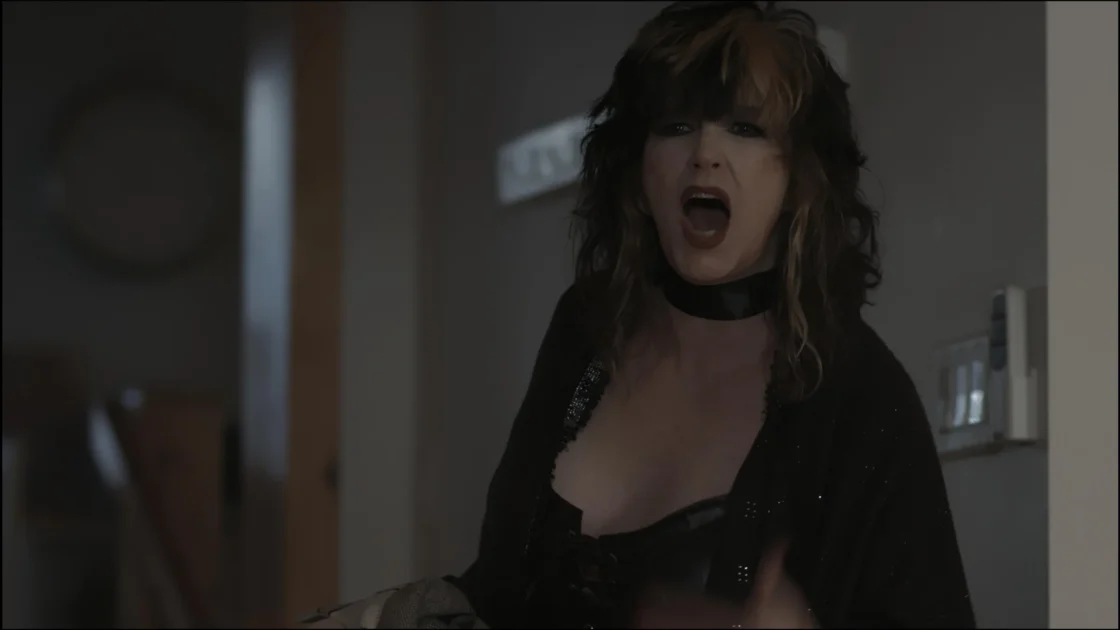
Joe Hollow directs, writes, edits, casts, and stars in a singular vision that’s messy but palpable in its commitment. Debbie Rochon, August Kyss, and Adriana Uchishiba navigate the chaos with more conviction than the script deserves.
The Unforgiven Souls: What Was the Point?
The ending is the most frustrating element. Sienna disappears, apparently reborn through the death dealer’s pact. A voiceover explains the unforgiven are now “reborn souls, pages in the death dealer’s diary of death.” The final scene shows Jack writing, a blonde woman tied up on the couch. Has he become a killer inspired by Sienna, or is this the death dealer collecting souls? The film doesn’t say. Deliberately.
Flesh of the Unforgiven demands patience and a high tolerance for the abstract. Fans of early Lynch or experimental body horror will find common ground here. It’s raw, mood-driven, and leaves a genuinely disquieting impression despite its narrative stumbles.
Online chatter positions it as a spiritual companion to Hellraiser, hinting at a larger connected universe within Hollow’s filmography. Whether that’s intentional or projection, it’s the kind of film that sparks exactly that conversation.
For another of “Flesh of the Unforgiven”, read from: ScareValue.com.