
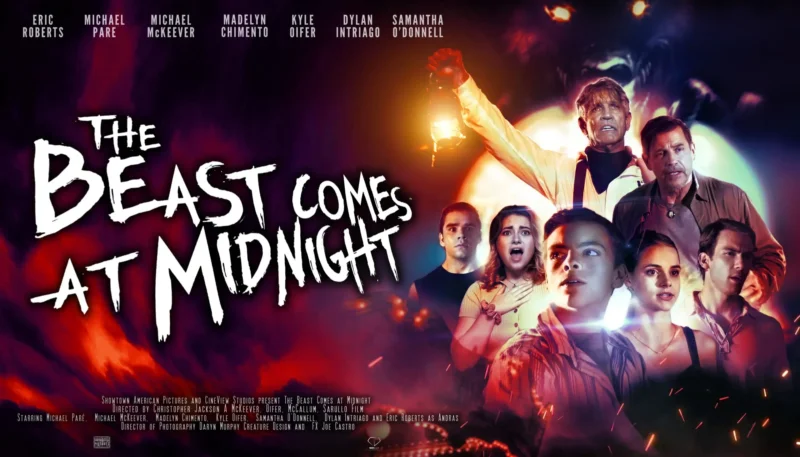
Film Title: The Beast Comes at Midnight
Cast: Michael McKeever, Madelyn Chimento, Eric Roberts, Samantha O’Donnell, Lloyd Anoa’i, Michael Paré
Director: Christopher Jackson
Writer: Jason Henne, Michael McKeever, Christopher Jackson
Distribution: Tubi (Free Streaming)
Production: Showtown American Pictures
Release Date: August 13, 2023 (Internet)
Review by: Mother of Movies
This review keeps the werewolf’s identity under wraps until the final section, where the ending is discussed in detail. If you’re planning a family movie night with curious young minds, maybe bookmark this for after the credits roll.
When Afternoon TV Meets Werewolf Mythology
There’s a specific breed of horror that exists in the space between Goosebumps episodes and Supernatural reruns. Soft enough for middle schoolers discovering the genre, earnest enough to take its mythology seriously, and polished enough to look like someone cared about the craft. The Beast Comes at Midnight plants its flag firmly in that territory, delivering a werewolf mystery that prioritizes accessible storytelling over visceral scares.
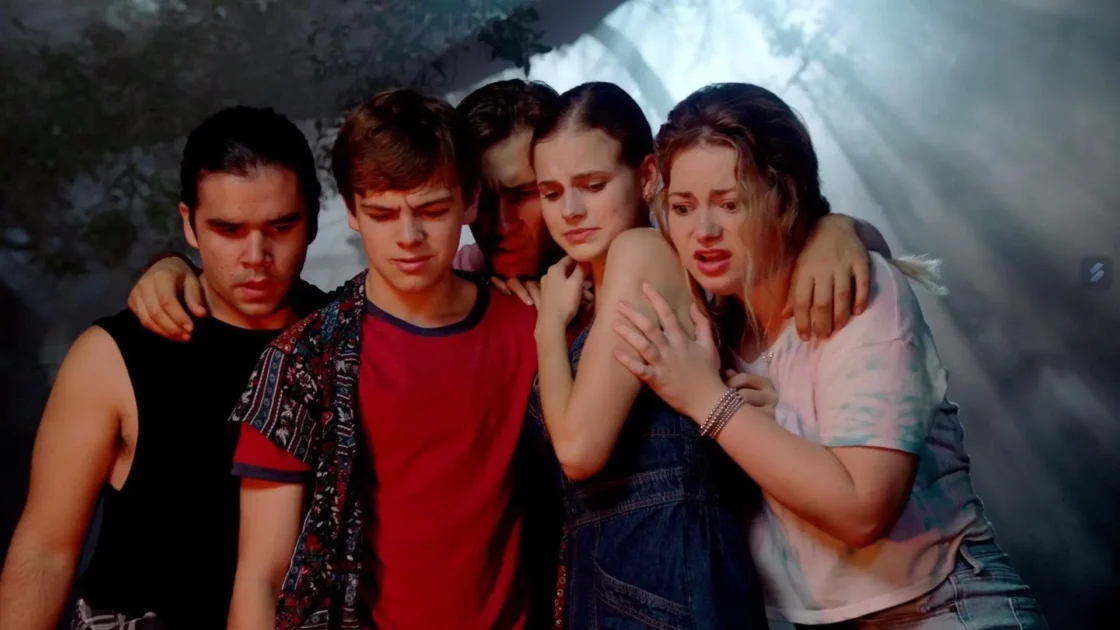
Tuff (Michael McKeever, who also co-wrote the screenplay) is the archetypal outcast. A teenage live streamer who goes by “Crimson Kid” online, pulling in a whopping two viewers while discussing werewolf mythology. When a fisherman goes missing near the local swimming hole as well as a few cats, he realizes the legends his museum-owner mentor Night (Michael Paré) told him about might be more than fantasy. Enlisting the help of four popular kids, including Marie (Madelyn Chimento), who inexplicably finds his nerdy enthusiasm charming, Tuff must track down the beast before it claims another victim in their small Florida town of Gibtown.
The film’s greatest strength lies in its production values. The cinematographer’s work captures the Spanish moss-draped Florida locations with genuine atmosphere. The Curiosities Museum provides an authentically quirky backdrop for Tuff’s world. It lends the film a sense of place that grounds its supernatural elements in something tangible.

Red Herrings and Training Wheels Horror
For adult horror enthusiasts accustomed to elevated genre fare or even competently executed B-movie mayhem, The Beast Comes at Midnight will test patience like a mandatory training seminar. The pacing meanders through scenes, characters verbalize exactly what they’re thinking, and adults fail to intervene when teenagers casually throw insults at each other. The mystery unfolds with the subtlety of a paint-by-numbers kit with pre-labeled sections.
But here’s where perspective matters: this isn’t The Witch or even Werewolves Within. This is entry-level monster movie storytelling designed for viewers who are still figuring out how red herrings work. When the film plants obvious suspects like Mutt (Dylan Intriago), whose jealousy over Marie’s attention to Tuff reads like a neon sign saying “MAYBE WEREWOLF?”, it’s not lazy writing for the intended demographic. It’s scaffolding. Young viewers get to feel clever when they realize the obvious answer isn’t the correct one. It builds those pattern-recognition skills that make horror fandom so rewarding later.
The dialogue operates at a similar accessible level. When Tuff’s streaming guest, Lazer Fang (Jason Henne, playing Shawn), appears online with a map marking disappearances, their exchange about werewolf mythology feels like exposition for an audience that might not know the basics. His mother’s running gag of infantilizing him, calling him by his real name instead of his streaming persona, announcing she’s running him a bath, provides gentle comedy that won’t frighten younger viewers while establishing the stakes. These are kids trying to be taken seriously in a world that treats them like children.
The Eric Roberts Situation
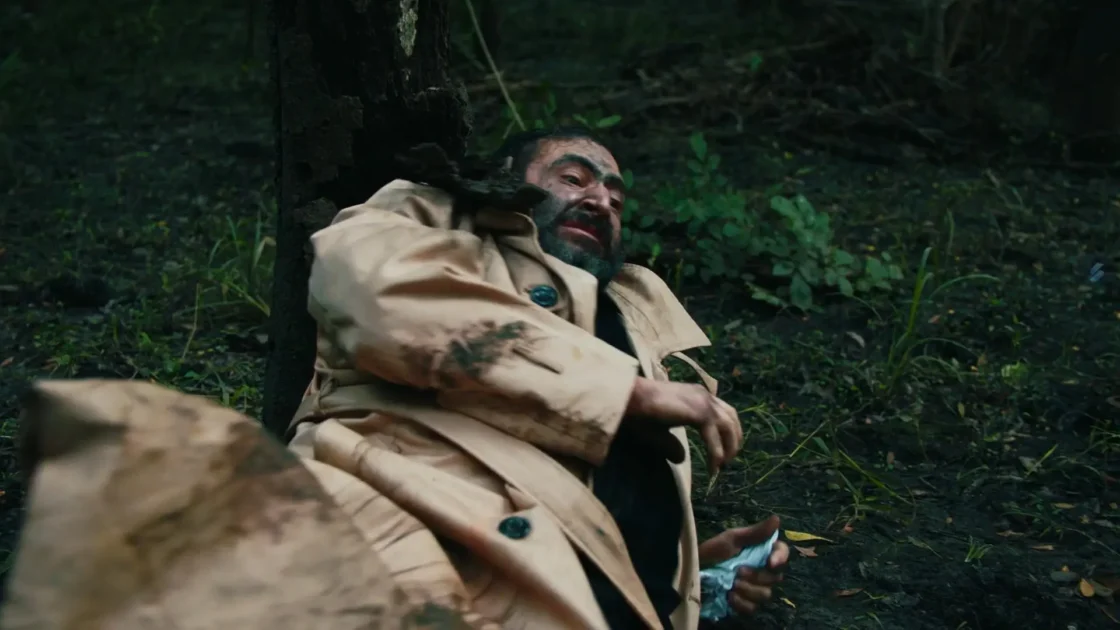
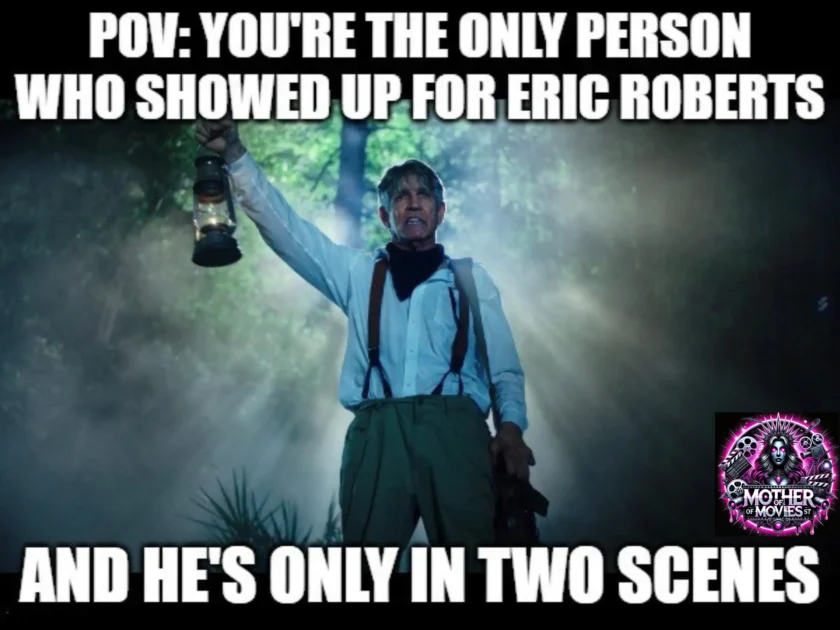
Let’s address the werewolf in the room. Eric Roberts appears in exactly two scenes, bookending the narrative as Andreas, a missing person whose disappearance kicks off the mystery. His opening forest sequence, complete with an inexplicable lamp and an immediate creature attack, promises a different kind of film than what follows. When Tuff discovers him alive near the finale with minimal explanation for his survival, it becomes clear that Roberts’ involvement was more marketing strategy than narrative necessity. For those of us who showed up specifically for his daytime-movie-charm presence, it’s the equivalent of ordering a pizza and receiving a single pepperoni.
Mythology Without the Depth
The film gestures toward werewolf lore without committing to any particular interpretation. Night’s Museum provides opportunities for mythology exposition. Still, these moments feel surface-level, like reading the first paragraph of a Wikipedia entry rather than diving into the full article. The concept of a “bringer of light” gets mentioned without elaboration, and the full moon’s power over the transformation follows genre convention without adding new wrinkles.
The practical werewolf costume itself looks exactly like what you’d find in a Spirit Halloween store’s premium section. It’s functional but not particularly inspired. No special effects enhance the transformation sequences; what you see is what you get. Again, though, this works for the target audience who might find CGI morphing sequences genuinely frightening.
The young cast delivers performances that range from competent to enthusiastic, with McKeever’s earnest commitment to Tuff’s outsider status providing an emotional anchor. The popular kids fall into recognizable archetypes. The coupled-up pairs (Wes and Silvia), the protective friend (Mutt), without much dimensionality, but they hit their marks and sell the “teens investigating supernatural mystery” premise with enough conviction to keep things moving.
When Your Audience Isn’t You
Here’s the uncomfortable truth for Mother of Movies and likely most of my regular readers. This film wasn’t made for us. It’s not festival content pushing boundaries or interrogating genre conventions. It’s not elevated horror using supernatural elements to explore trauma. It’s not even competent B-movie schlock reveling in its own absurdity. The Beast Comes at Midnight is a gateway drug for young viewers who need something between Scooby-Doo and Teen Wolf (the MTV series, not the film), and judged by that metric, it accomplishes its modest goals.
The Florida locations provide an authentic atmosphere without feeling threatening. The violence stays mostly off-screen. We see reactions rather than gore. We hear screams rather than witness carnage. The teenage characters face danger but never feel truly imperiled in a way that might cause nightmares. Even the adults in the story, while mostly mediocre in the acting department, provide a reassuring presence rather than the absent or sinister authority figures that populate more aggressive horror fare.
For parents seeking Halloween content for middle-grade kids, or teenagers just starting to explore horror beyond what’s deemed appropriate for elementary school, this fits a genuine niche. It’s the kind of film that might play during a supervised sleepover. The goal is mild spookiness rather than genuine fear, where everyone can feel brave for watching something with “beast” and “midnight” in the title without actually being traumatized.
The Streaming Landscape’s Strange Offerings
The Beast Comes at Midnight represents an interesting phenomenon in the free streaming ecosystem. Platforms like Tubi have become repositories for films that exist outside traditional distribution models. Too polished for pure amateur status, too niche for theatrical consideration and, too specific in their appeal for major streaming services. Christopher Jackson’s feature debut (following shorts and a two-episode TV series) demonstrates technical competence in camera work and production design while revealing the challenges of first-time feature storytelling. There are some pacing issues, tonal inconsistencies, and narrative choices that prioritize accessibility over complexity.
The three-writer collaboration (Jackson, Henne, and star McKeever) shows the typical challenges of shared creative vision. Ideas that might have worked individually get diluted in committee, and the focus necessary for tight storytelling gets scattered across competing priorities. Yet there’s genuine affection for the material here. There’s a sense that everyone involved wanted to create something that honored werewolf mythology while making it approachable for younger audiences.
The mystery elements telegraph their solutions early and often. But again, these are features rather than bugs for the intended demographic. Younger viewers benefit from that extra time to process information, that explicit dialogue confirming what they’ve observed, and those obvious clues validating their detective skills.
The Verdict
The Beast Comes at Midnight succeeds at being exactly what it intends to be: accessible supernatural mystery for viewers who need training wheels before graduating to more sophisticated horror fare. The cinematography demonstrates genuine craft, and the mythology framework, however surface-level, introduces concepts that curious young minds might research further.
For adult horror enthusiasts, this will feel tedious, overly simplistic, and dramatically inert. The pacing drags, the performances vary wildly in quality, the dialogue explains rather than implies, and the mystery elements lack any genuine surprise. But dismissing it for those qualities misses the point entirely. It’s the equivalent of criticizing a children’s bicycle for not handling like a mountain bike. Different tools for different riders.
If you’re seeking Halloween content for middle-grade kids, something that feels like a “real” werewolf movie without the intensity that causes nightmares, this fits that specific niche admirably. It’s the film equivalent of afternoon television supernatural programming. It’s earnest, safe, and just spooky enough to feel like an adventure without any genuine danger.
For Mother of Movies’ regular audience of adult genre fans seeking innovative storytelling, technical excellence, or even competent B-movie entertainment? Skip this one. But if you’ve got young relatives discovering horror, or you’re feeling nostalgically generous toward the kind of soft supernatural content that defined weekend television in earlier eras, The Beast Comes at Midnight offers a harmless way to spend ninety minutes.
It’s not trying to reinvent werewolf mythology or push genre boundaries. It’s trying to give young viewers their first taste of creature features, and by that modest measure, it succeeds.
The Beast Comes at Midnight is rated
3.5 full moons for gateway horror enthusiasts out of 5
Gateway Werewolf Mystery
The Beast Comes at Midnight is training wheels horror for the next generation, polished enough to look professional, soft enough not to cause nightmares, and earnest enough to make young viewers feel like real monster hunters. Adults will find it tedious, but that’s because they’re not the audience.
The Beast Comes at Midnight is Streaming on:
“The Beast Comes at Midnight isn’t trying to reinvent werewolf mythology or push genre boundaries; it’s trying to give young viewers their first taste of creature features, and by that modest measure, it succeeds.”
Films With Similar Vibes to The Beast Comes at Midnight
For readers seeking similar entry-level supernatural mysteries with teen protagonists and accessible scares:
- Goosebumps (2015) – R.L. Stine’s monsters come to life as teens must stop them, hitting that sweet spot between family-friendly and genuinely spooky
- Scary Stories to Tell in the Dark (2019) – Guillermo del Toro-produced anthology where teens face creatures from the classic book series, polished production with entry-level horror
For readers seeking more serious supernatural mysteries with werewolves:
- Hold the Fort – 2025’s Fantasia Film festival break out horror comedy
- Wolf Man – Stars Christopher Abbott and Julia Garner. A slow burn.
- Hell Hole – Indie darlings Adam and Toby Posers,beast feature
Everything from here reveals exactly how Tuff defeats the beast and what that ending. Last chance to bail if you’re saving this for movie night.
How It All Ends
The actual werewolf reveal eschews any connection to established characters. Opting instead for a random Gibtown townsperson (James Castro as “beast man”). His transformation back to human form comes with a grateful “thank you” after Tuff’s silver sword does its work. This choice, making the monster a stranger rather than someone from the core cast, removes any emotional weight from the climax. It also sidesteps the betrayal trauma that might be too intense for younger viewers. It’s a calculated decision that prioritizes comfort over complexity.
The climactic confrontation unfolds with the straightforward logic of a kid playing out action figures: Tuff retrieves silver knight armor from Night’s museum (helmet, shield, and sword). Then he confronts the fully transformed werewolf, gets knocked down, and loses his weapon and helmet. Just when it seems our hero might become a midnight snack, his friends shine their car headlights at the creature, momentarily blinding it before running it down with their vehicle. The werewolf survives this vehicular assault, because of course it does. And this allows Tuff to retrieve his sword and deliver the killing blow.
The aftermath includes minor injuries to supporting characters (Silvia’s dress catches in a car door, causing a comedic fall that’s later treated like a concussion). Night receives facial scratches from the werewolf and passes out and both of these “injuries feel more like participation trophies than genuine consequences. Everyone survives, the beast is defeated, and Gibtown can return to its quirky small-town normalcy. And Tuff almost kisses his sweetheart. Almost.
Soft Horror Movies for Young Teenagers
Then comes the future-facing epilogue: Tuff’s streaming channel has evolved from two viewers to thirty-five subscribers. Marie, Mutt, and Wes now serve as permanent co-hosts. The “stay weird” motto that defined his outsider status has become a brand, and his credibility as a mythology expert is established by actual monster-hunting experience. But the real hook arrives when a clearly distressed caller phones into the streamer with a revelation. He knew Tuff’s father and needed his help with something unspecified.
This setup suggests a potential sequel where Tuff becomes the go-to expert for supernatural problems. It builds on his father’s legacy while maintaining his streaming platform as a way to connect with other believers. It’s a wholesome vision of monster hunting as community building, where being weird isn’t a liability but a superpower, and where the outcast finds his tribe through shared belief in things that go bump in the night.
The groundwork is laid for young viewers to imagine themselves in Tuff’s position. The kid who was right all along, whose obsessions weren’t childish but preparatory, and whose outsider status positioned him perfectly to save the day.
The Beast Comes at Midnight
Director: Christopher Jackson
Date Created: 2025-08-13 19:51
3.5
