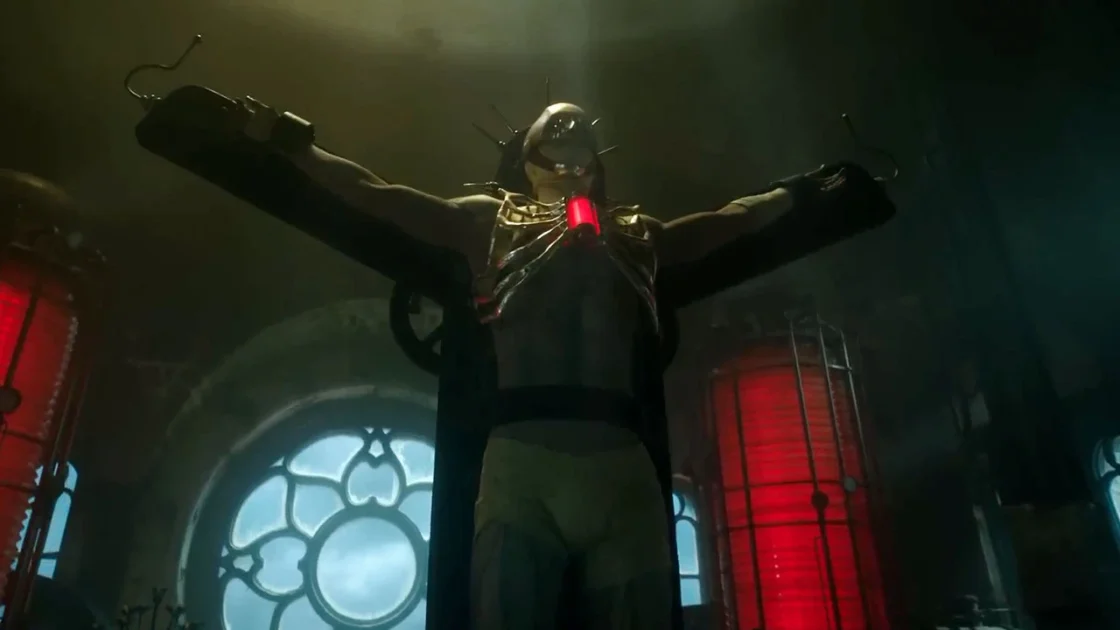
There’s a moment early in Frankenstein where Victor’s father, Leopold (Charles Dance), delivers education with the kind of cruelty that shapes monsters long before they’re stitched together. It’s not subtle. Del Toro doesn’t traffic in subtlety when he can use a scalpel. Instead, it establishes something crucial: this film understands that Frankenstein’s creature wasn’t the first monster in the family. It was just the first one honest enough to look like what it was.
This review dissects themes, performances, and del Toro’s visual storytelling without revealing the final fate of our players. However, narrative turns and character arcs are examined in detail. A separate spoiler section addressing the ending appears at the conclusion for those who’ve already witnessed the creation.

When Gothic Romance Meets Practical Monstrosity
Guillermo del Toro has spent decades proving he’s the only filmmaker working today who can make you weep for something with bolts in its neck. Frankenstein feels like the culmination of that particular obsession. This isn’t just another adaptation of Mary Shelley’s 1818 novel, a devotion written in celluloid to practical effects and operatic tragedy. It’s a film that dares to ask whether redemption is possible when you’re built from the scraps of the dead.
Oscar Isaac’s Victor Frankenstein is all nervous energy and intellectual arrogance. A man so consumed by his vision that he mistakes creation for love. When his creature (Jacob Elordi, doing career-best work under layers of phenomenal prosthetics) first opens his eyes, Victor doesn’t see a person. He sees a failed experiment, something that didn’t instantly validate his genius. It’s the same disappointment his father showed him, the same emotional violence that turns children into adults who mistake control for affection.
— Guillermo del Toro
The Architecture of Empathy
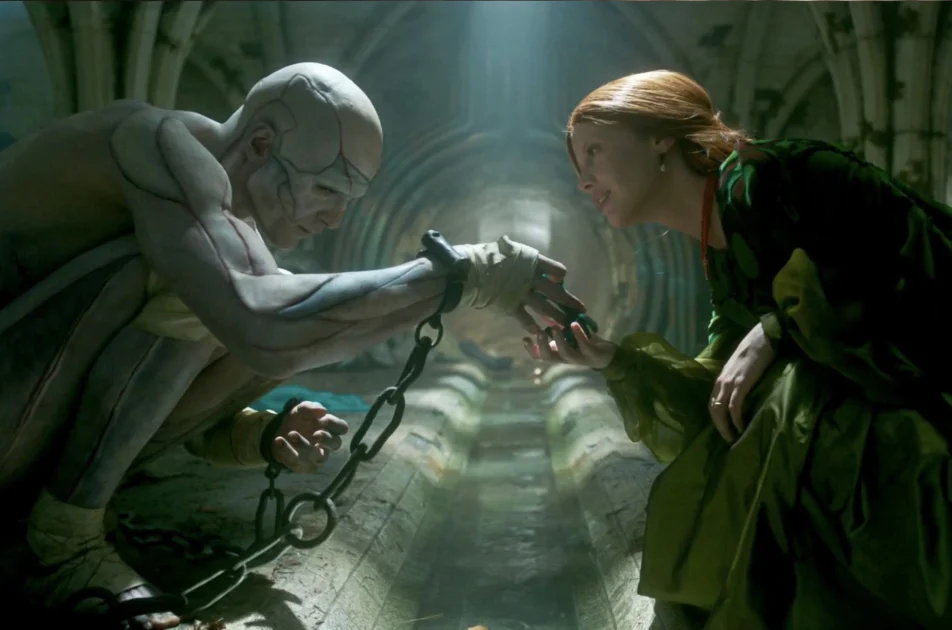
Del Toro’s decision to build full-scale sets for the most prominent sequences isn’t just craftsmanship; it’s philosophy. When the Creature is dragged into underground tunnels and chained like an animal, you feel the weight of those stones. The cold seeps through the screen. This is a film that understands Gothic horror requires architecture that oppresses, spaces that trap, and environments that reflect the interior prisons we build for ourselves.
The two-part narrative structure, first through Victor’s self-justifying account, then through the Creature’s own testimony, is lifted directly from Shelley’s novel. It works because del Toro never lets you forget that every story is a plea for understanding. Victor frames himself as the victim of his own genius. The Creature frames himself as the victim of Victor’s abandonment. Both are right. Both are monsters.
Mia Goth’s Elizabeth is where the film finds its emotional center, and it’s a testament to both Goth’s performance and del Toro’s script that she never becomes a mere plot device. When she sees past the Creature’s stitched-together exterior to the soul underneath, it’s not because she’s naive or saintly. It’s because she understands what Victor never could: that humanity isn’t something you’re born with, it’s something you’re given by people who choose to see it in you.
The romantic elements here are exquisite in a way most Frankenstein adaptations fumble or ignore entirely. Del Toro knows that Shelley’s novel is fundamentally about love, the love Victor denies his creation, the love the Creature desperately seeks, the love that could have prevented every tragedy that follows. When Elizabeth teaches the Creature patience and recognition, you’re watching the film that del Toro has been building toward his entire career. A monster movie where the real horror is the refusal to love what we’ve made.
Practical Magic and Operatic Violence
Alexandre Desplat’s score is a melancholic masterpiece, strings that sound like they’re being played in a cathedral made of bones. He understands, as del Toro does, that this story requires music that mourns even as it terrifies. The composer has described his process as “organic,” and you can hear it in every note. This isn’t a soundtrack imposed on the film; it’s something that grew alongside it, as alive as every other element.
The gore, when it arrives, is purposeful rather than gratuitous. The death of Victor’s mother at his father’s hands is filmed with the kind of intimate horror that is not excessive. The initial making of the Creature shows Victor cutting through legs, arms, and sinew. The kind that makes you look away because it feels real. The degloving of a wolf’s head during a fight sequence is spectacular, practical effects work, combined with the visceral craftsmanship of CGI without being overdone.
Real wolves and computer-generated ones were used, and it looks fantastic. There’s enough blood here to earn the R rating, but this isn’t a film interested in violence for its own sake. Every drop spilled serves the narrative’s exploration of what it costs to create life, to take it, to witness both.
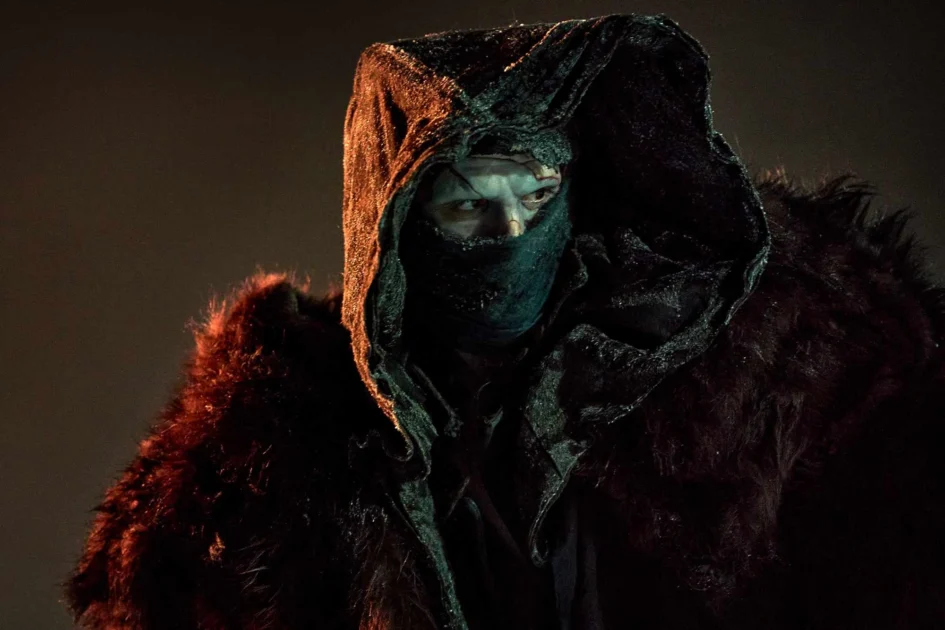
Jacob Elordi’s performance deserves particular attention because it would be easy to let the makeup do the work. Instead, he finds humanity in every gesture, every stumbling attempt at speech, every moment of confusion when the world refuses to make sense. When the Creature is finally freed, not by choice, but because Victor’s jealousy demands his destruction, you feel the weight of chains that were never just physical.
— Victor Frankenstein
This line, spoken by Victor as he reflects on his creation, resonates throughout the film as del Toro’s thesis statement: that some achievements are perversions of the natural order, not because they’re impossible, but because they’re accomplished without love.
When Streaming Deserves Theatrical Treatment
The behind-the-scenes documentary Frankenstein: The Anatomy Lesson premiered immediately after the feature on Netflix. Del Toro is a filmmaker who takes more risks now, who has the clout to demand full practical sets and months of prosthetic work and scores that sound like they cost more than most indie films’ entire budgets. This is a risk that paid off spectacularly.
Watching del Toro work with his cast and crew, you see someone who understands that filmmaking is collaborative alchemy. He talks about seeing the props every day, about working to capture scenes exactly as he envisions them while remaining open to the ideas of everyone around him. It’s the same philosophy Elizabeth brings to the Creature: recognition that creation is an ongoing process, not a single moment of divine inspiration.
Lars Mikkelsen’s Captain Anderson serves as the audience surrogate. He initially fears this gigantic creature hunting Victor across the ice, then gradually he understands the tragedy at the story’s heart. It’s a small role elevated by Mikkelsen’s ability to convey the shift from horror to empathy in a single expression. When Anderson finally understands what Victor did, what he failed to do, it’s the moment the film asks us to examine our own capacity for seeing humanity in the faces we’d rather call monstrous.
The Weight of Imperfection
Some viewers have criticized what they call the “saccharine ending,” and there’s validity to wanting something darker, more in line with traditional Gothic tragedy. The romantic in me wanted to see Elizabeth become the Creature’s companion, wanted Victor to complete that final act of creation that might have redeemed him. But del Toro is after something else here. The idea that redemption might not require a mate, that forgiveness might be its own form of companionship.
The film currently sits at 7.7 on IMDb based on over 21,000 user reviews, which feels about right for a movie this uncompromising in its emotional sincerity. Del Toro has never been interested in ironic distance or cool detachment. He makes films that wear their hearts on their sleeves, and if that heart is stitched together from a dozen different sources, well, that’s just more reason to love it.
This is a film about loving imperfect things, about forgiving the flaws in what we create and in ourselves. It’s about the violence of bringing something into the world and then refusing to care for it. It’s about every parent who looked at their child and saw only disappointment, every creator who abandoned their creation because it didn’t match the vision in their head.
Frankenstein is beautiful and fantastical, with world-building that feels both meticulously planned and organically grown. The care taken in putting it together shows in every frame, every performance, every choice when less instead of more would have been easier and cheaper. This is the work of a filmmaker who has earned the right to make exactly the movie he wants, and what he wants is to make you cry for a monster.
How Frankenstein (2025) Connects to Del Toro’s Wider Universe
The film has generated significant online discussion regarding its fidelity to Mary Shelley’s novel versus del Toro’s artistic liberties. Horror communities have particularly praised Jacob Elordi’s performance, with many noting this is the first time they’ve seen the Creature portrayed with such emotional complexity since Boris Karloff’s original interpretation. The practical effects work has been celebrated across genre film circles as a rebuke to the over-reliance on CGI in modern monster movies.
Mia Goth continues her streak of choosing projects that subvert traditional feminine roles in horror, following her work in the X trilogy. Oscar Isaac has spoken in interviews about the challenge of playing Victor as someone simultaneously sympathetic and monstrous, noting that del Toro encouraged him to find the humanity in Victor’s worst decisions.
The decision to release on Netflix rather than pursue a more prolonged theatrical distribution has sparked debate about whether prestige horror can survive without theatrical runs. However, del Toro has defended the choice, arguing that it allows the film to reach a global audience simultaneously, which is fitting for a story about connection and recognition across boundaries.
Frankenstein is rated:
5 creatures bathed in dawning sunlight out of 5
Watch del Toro’s trailer and see how it reframes Mary Shelley’s vision → [Trailer Analysis, Spoiler Section & Book Comparison]
Gothic Romance Stitched with Soul
Del Toro’s Frankenstein doesn’t just resurrect Mary Shelley’s Gothic masterpiece, it breathes operatic life into every bolt and suture. This is monster cinema as emotional excavation, where practical effects meet philosophical depth and every frame asks: what does it cost to create without love?
Filmmaker’s Signature: Guillermo del Toro’s Gothic Romanticism
Guillermo del Toro has spent his career building a filmography that treats monsters as the most human characters on screen. From Cronos (1993) through The Devil’s Backbone (2001), Pan’s Labyrinth (2006), The Shape of Water (2017), and Pinocchio (2022), del Toro returns obsessively to the same themes. Violence of authority, the redemption found in accepting imperfection, and the idea that love is the only force capable of transforming monstrosity into humanity.
His visual style is immediately recognizable: Gothic architecture that oppresses, practical creature effects that emphasize texture and weight, color palettes that shift from cold blues to warm golds as characters move from isolation to connection. He’s a maximalist in an era of minimalism, a filmmaker who believes more is more when “more” means more craft, more detail, more emotional sincerity.
Frankenstein represents the culmination of del Toro’s career-long exploration of what it means to be created without love and to seek it anyway. The film’s emphasis on full practical sets, prosthetic work, and operatic emotional beats is pure del Toro’s signature. When he talks about the endings of Cronos, Pinocchio, and Frankenstein being “exactly the same”, a character bathed in dawning sun, accepting daylight, he’s describing his entire artistic philosophy: that redemption is always possible for those brave enough to face what they are.
Need another film with body horror? Keeper 2025 is a different kind of transformation.