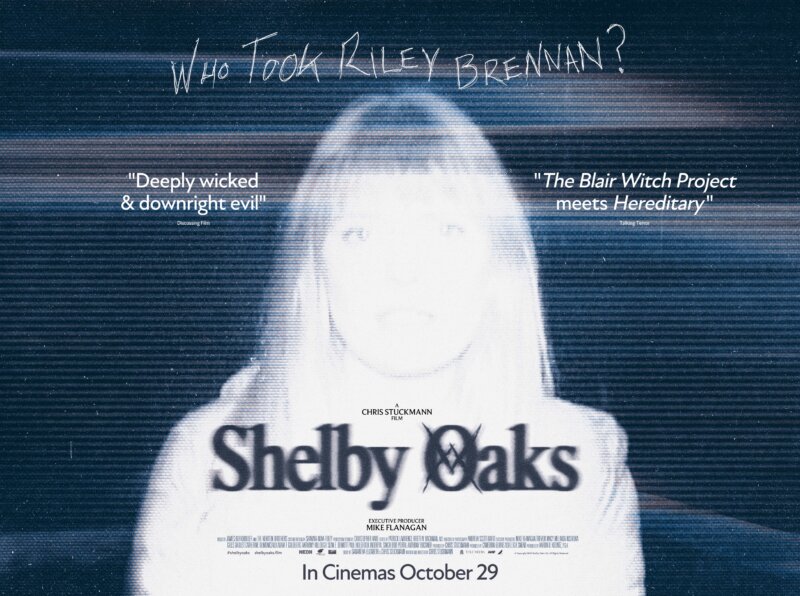
An article about Shelby Oaks – ending explained. Plus, all the other details you think you worked out.
Read the non-spoiler review on Mother of Movies for Shelby Oaks
Skip to a Specific Section
Spoiler Warning: Everything About Shelby Oaks is Revealed Below
This article dissects the ending, reveals character fates, and explores the film’s supernatural mythology. If you haven’t watched Shelby Oaks, read the spoiler-free review first. Everything changes once you know what happens.
The Arrival of Wilson Miles: Restraint as Craft
The film’s turning point arrives without warning: a man appears at Mia’s door, utters the cryptic phrase “she finally let me go,” and shoots himself. In his head: the missing tape from Riley’s final livestream. This moment, executed with surgical precision, accomplishes what most found-footage films struggle with: it generates genuine shock without relying on gore or jump scares.
“She finally let me go,”
Quote from Shelby Oaks
His statement reveals something darker: Wilson wasn’t the perpetrator. He was a vessel.
What makes this sequence really interesting isn’t what we see, it’s how cinematographer [credit needed] and director Chris Stuckmann chose to frame it. Rather than opting for off-screen violence or gratuitous gore, they made a deliberate choice: light the gun, darken the impact, cut to black. The cinematography pulls back from the moment of impact itself, effectively obscuring the gun’s position at his head through strategic lighting, then transitions to black screen the instant the shot fires. We don’t see visceral damage or blood spray. We see the man’s face, his expression, his dire anxiety, all preserved without trauma.
This is where Mike Flanagan’s influence becomes visible. What could have been exploitative becomes compassionate. By keeping the camera on Wilson’s face rather than cutting away entirely, Stuckmann preserves the character’s emotional state. Off-screen deaths rob us of this; we get only sound effects and aftermath. Here, we witness the desperation without the wound. The editing is so precise, so thoughtfully considered, that it spans mere seconds yet communicates volumes about restraint in horror filmmaking.
The scene doesn’t end there. After the black screen, we cut to Wilson in a body bag. Then, crucially, we flash back moments earlier to Mia’s perspective. We see the back of his head. We see her face as the gun goes off. We experience her emotional response to this stranger’s death at her doorstep. The filmmakers have constructed a 360-degree view of this suicide, showing us multiple angles, multiple emotional registers, all while maintaining the found-footage framework. It’s phenomenal craft work that elevates a moment of violence into something genuinely human.
This is why found-footage horror, when executed with intelligence, remains a guilty pleasure genre worth defending.
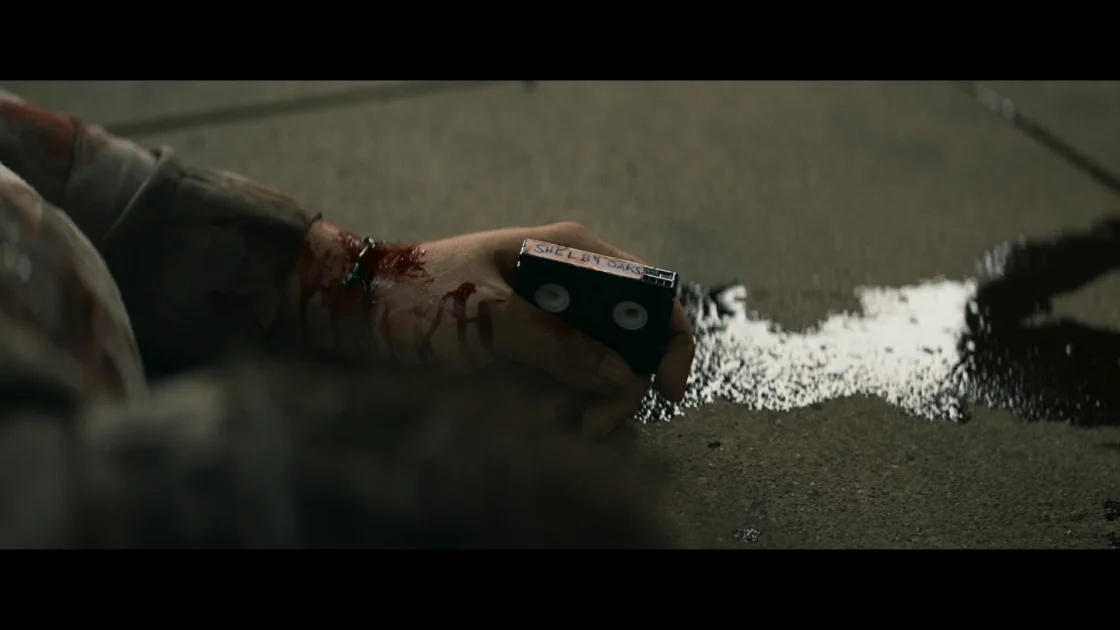
The Setup: Wilson Miles and the Missing Tape, In Shelby Oaks
Wilson Miles is an escaped prisoner from the county jail that burned down years earlier. The official narrative suggests he was an arsonist or a catalyst for the riot that destroyed the facility. But Wilson’s suicide and his final words,” she finally let me go,” suggest something far more sinister: he’s been possessed by Tarion, the incubus, for far longer than anyone realized.
The demon attached itself to Wilson’s family line generations ago. When the jail fire occurred, Wilson became aware of his possession, or the possession became aware of him. His agency was compromised. He became a vessel for something that needed a specific outcome: the creation of a demon child.
The tape Wilson delivers contains the final hours of Riley’s livestream investigation at Shelby Oaks fairgrounds. It’s the missing piece of the puzzle, the evidence that transforms Mia’s investigation from a missing-person case into something mythological.
The Recovered Footage: What Riley Captured
Once Mia watches the tape, the film’s perspective shifts. We see what Riley and her crew experienced during their final night at Shelby Oaks. The footage reveals:
- Riley’s reluctance to be at the location; she wanted to leave
- Her crew members’ escalating fear as supernatural phenomena intensify
- The Man in the Window: the entity Riley had been drawing since childhood, the figure from her night terrors, manifests physically
- This entity is Wilson Miles, but Wilson is inhabited
The recovered footage shows Wilson murdering Riley’s crew with methodical precision. But this isn’t a human killer. The violence carries an intelligence, a purpose. Wilson is being piloted by something older, something that has been orchestrating this moment for generations.
Riley as the Successful Vessel (Shelby Oaks, Ending Explained)
Shelby Oaks isn’t Riley’s first encounter with the supernatural. She’s been drawing the Man in the Window since childhood, a premonition, a connection to something that was always hunting her. The film implies a graveyard exists somewhere, filled with the bodies of failed attempts: babies Riley had that were either dead, killed, or weren’t the demon they needed.
Riley was the successful vessel. She was the one Tarion had been waiting for. Through her, the incubus could create its heir, a demon child born into the world, ready to be raised, ready to continue the cycle.
But something goes wrong. Riley, in a moment of maternal clarity or supernatural resistance, realizes what she’s been carrying. She tries to kill the baby. She tries to escape. During the struggle with Mia, Riley falls from a window. The hellhounds, demonic familiars in the form of black dogs with glowing eyes, finish what the fall started. Riley dies, still trying to protect her sister from what she’s become.
Here’s where the horror deepens: Mia was always the real target. Tarion didn’t need Riley to bear the child. It needed Riley to lead Mia to Shelby Oaks.
Norma, the keeper of the incubus, lured Mia under the guise of saving her sister. She manipulated Mia’s desperation, her need to find Riley, her willingness to believe in supernatural explanations. Mia wasn’t deceived so much as strategically guided. Norma performed blood rituals, created the conditions for possession, and waited for Mia to walk into the trap.
Mia’s Manipulation and the Real Target
But Mia’s emotional vulnerability made her the perfect caretaker. She could never have children. Time had passed her by. When she holds the demon baby, alive, sleeping, innocent-looking, something in her breaks. Or perhaps she realizes, in that moment, that she’s been chosen not as a vessel but as a mother. The demon needs a caretaker. It needs someone willing to raise it, to protect it, to love it.
The Ending: Ambiguous Possession
Mia messages Robert asking him to bring the cops to her location. She’s not fully aware of what she’s done. She’s not fully aware of what she’s become. But in the final shot, with the demon standing behind her and the baby sleeping peacefully in her arms, the ambiguity crystallizes: Is she possessed? Is she willingly accepting her role? Has she always been the target, supernaturally lured without her knowledge?
The final image of Shelby Oaks is deliberately unsettling. Mia stands with the demon behind her. The baby is alive and sleeping. The cycle continues.
Shelby Oaks Ending Explained
Unlike The Exorcist, where possession is a battle to be won, Shelby Oaks suggests something far more insidious: that sometimes we choose our own damnation. Sometimes we walk toward the darkness because the people we love are already there. Sometimes the scariest thing isn’t being possessed, it’s realizing you might have wanted to be.
The film leaves us uncertain whether Mia is now possessed by Tarion, whether she’s been manipulated into willing servitude, or whether she’s simply a woman who lost everything and found something, even if that something is a demon’s child to hold onto. That ambiguity is the film’s greatest strength. It refuses to resolve. It refuses to comfort us with answers.
This is why Shelby Oaks lingers. This is why it’s horror that operates on psychological and thematic levels rather than visceral ones. The scariest ending isn’t the jump scare. It’s the slow realization that you’ve been walking toward the darkness all along, guided by grief, by love, by the desperate human need to save someone, even when that someone is already lost.
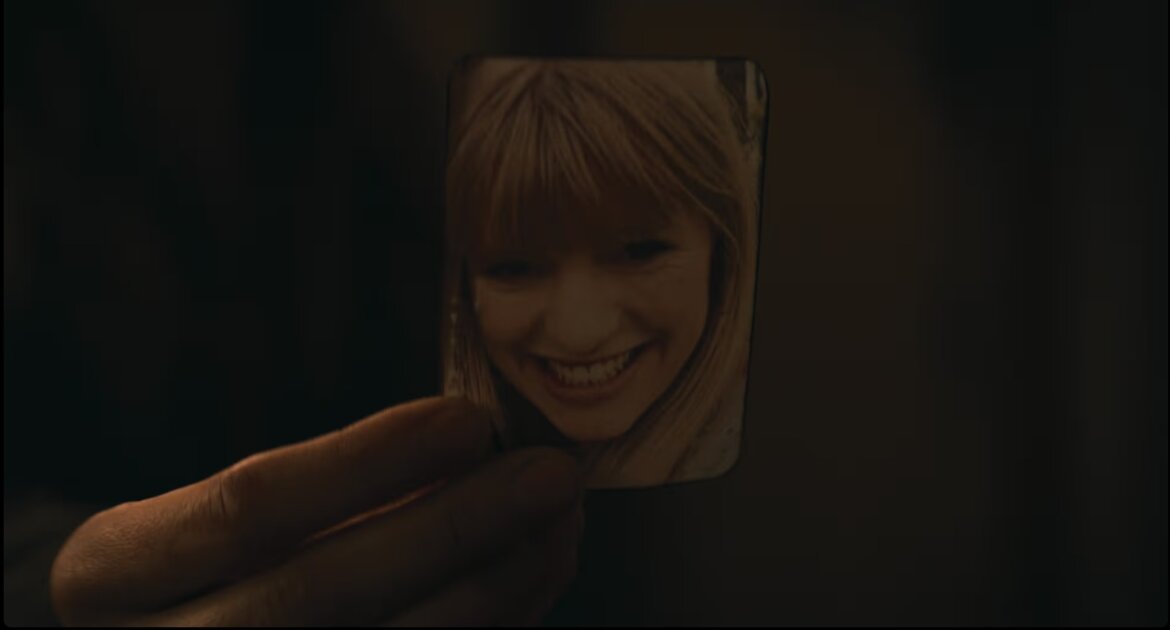
Filmmaker Stamp: Chris Stuckmann’s Directorial Vision
Chris Stuckmann built his reputation as a film critic on YouTube, where he developed a following for his articulate, passionate analysis of cinema. That critical background informs every frame of Shelby Oaks. Rather than making a debut feature that relies on spectacle or gore, Stuckmann crafted a film that demonstrates a profound understanding of narrative structure, thematic coherence, and the mechanics of audience manipulation.
His directorial choices reflect a critic’s sensibility: every element serves the story. The found-footage framework isn’t a gimmick; it’s a narrative tool that mirrors the fragmentation of truth and the unreliability of perspective. The interviews with Mia function as a Greek chorus, providing context and emotional anchoring. The recovered footage is presented not as raw chaos but as evidence in a larger mystery.
What’s remarkable about Shelby Oaks is its restraint. In an era where horror films often mistake loudness for intensity, Stuckmann understands that silence, implication, and absence generate more dread than any jump scare. The Wilson Miles suicide scene exemplifies this philosophy, a moment of violence handled with such care that it becomes more disturbing than any gore could be.
This is a filmmaker who understands that the best horror doesn’t show you the monster. It shows you the effect of the monster. It shows you grief, obsession, and the slow realization that you’ve walked into a trap you didn’t see coming.
Final Thoughts: A Film That Improves With Reflection
Shelby Oaks is the kind of horror film that demands, and rewards, multiple viewings. Details that seem incidental on first viewing take on sinister resonance once you understand the full scope of Tarion’s plan. Mia’s early decisions, her interactions with Robert, her obsessive research, all of it becomes a map of her possession, or her willing descent into darkness.
The film trusts its audience to piece together its mythology, to notice the recurring symbols, to understand that the supernatural isn’t an intrusion into the narrative, it’s the narrative’s entire foundation.
For those who appreciate horror that operates on psychological and thematic levels rather than visceral ones, Shelby Oaks is essential viewing. It’s a reminder that the scariest thing isn’t what jumps at you from the dark. It’s the slow realization that you’ve been walking toward the darkness all along, guided by the people you love most, and by your own desperate need to believe you can save them.
Similar Films to Shelby Oaks 2025
Interested in exploring similar themes of family trauma, supernatural mythology, or found-footage innovation?
- Hereditary (2018) — Ari Aster’s exploration of generational curses and family secrets. Like Shelby Oaks, it uses grief as a gateway to the supernatural.
- The Wailing (2016) — Na Hong-jin’s mystery-horror masterpiece about a village plagued by mysterious deaths. Ambiguous ending that rewards obsessive analysis.
- The Blair Witch Project (1999) — The foundational found-footage text. Both films use absence and implication to generate dread.
- Midsommar (2019) — Another Neon release. Explores how grief and obsession can lead us into dangerous spaces we don’t fully understand.
- Official Website for Shelby Oaks
