
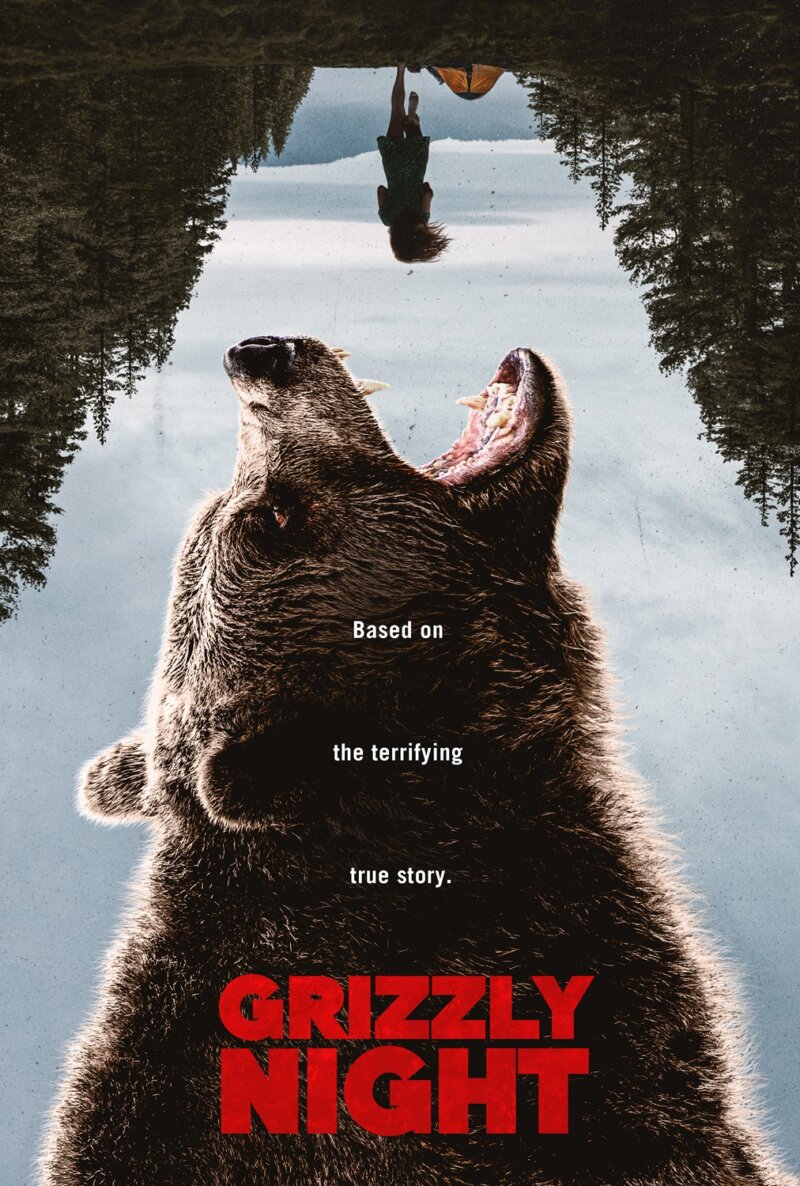
Directed by Burke Doeren | Screenplay of Grizzly Night 2026 by Katrina Mathewson & Tanner Bean | Starring Brec Bassinger, Jack Griffo, Charles Esten, Oded Fehr | Distributed by Saban Films | Release Date: January 30, 2026, | Review by Mother of Movies
Grizzly Night steps into the shadowy woods of 1967 Montana’s Glacier National Park, dramatizing the chilling true story of the “Night of the Grizzlies.” Directed by Burke Doeren in his feature debut, the film thrusts us into the chaos of two fatal bear attacks occurring simultaneously, miles apart. The premise is taut: rookie ranger Joan Devereaux (Lauren Call) must shepherd terrified campers through a wilderness that quickly becomes a nightmare.
Grizzly Night (2026): A Hibernating Plot with Teeth That Don’t Quite Bite
Getting a screener is always a roll of the dice; it usually means the film is going to be exceptionally awful or a hidden gem, but rarely does it sit comfortably in the middle. Straight up, horror logic usually dictates that a low budget means zero sharks, zero monsters, or zero bears. If there is an animal, it’s usually CGI that looks like it was rendered on a PlayStation 2, or a carbon copy of something we’ve seen a thousand times before. Grizzly Night goes to the core of what people are looking for in an animal horror movie, but it takes a meandering path through the woods to get there.
This is the directorial debut of Burke Doeren, and credit where it’s due, the film utilizes practical locations to recreate the dense forestry and mountainous terrain of 1960s Montana effectively. The cinematography by Brian Mitchell and Ian Start captures the claustrophobic vastness of the wilderness. We get plenty of sweeping terrain shots and the imposing silhouette of the mountains, which adds a layer of isolation that the script desperately needs. However, while the landscape is stunning, the narrative pacing often feels like it’s hiking uphill in mud.
The film sets up a bit like a slasher movie, think Friday the 13th meets a National Geographic special gone wrong. We are introduced to our core group of kids, including Julie Helgeson (Brec Bassinger) and Roy Ducat (Matt Lintz), hitchhiking their way to the park. The vibe is appropriately retro; the costuming and the aesthetic of the little corner store fit the 1967 era perfectly. It’s a very laid-back universe, perhaps too laid-back. The editing is choppy in the first act, jumping from hitchhiking to the forest without much transition, but the cast is doing a decent job selling the period piece energy.
No Escape – Grizzly Night
We arrive at the “Chalet,” a massive tourist building near Trout Lake, where the staff is casually scraping food scraps into garbage bags. And here is where the film loses me on a logical level. We immediately see these bags being placed on the ground, untied, and unsecured. Now, I know this is a dramatization of true events, but for an establishment associated with Rangers to have absolutely zero security measures for waste in bear country is mind-boggling. Even here in Australia, we have bins that don’t open because of “bin chickens” (ibises) and cockatoos. We lock our trash down for birds; these people are inviting apex predators to a buffet. Maybe it’s a 1960s thing…
It’s almost an ironic play; the staff is asked about bears, and they give these cryptic “stick around, and you’ll see” answers. Well, stick around, they did.
Bear Witness: The Trek Through Grizzly Night 2026
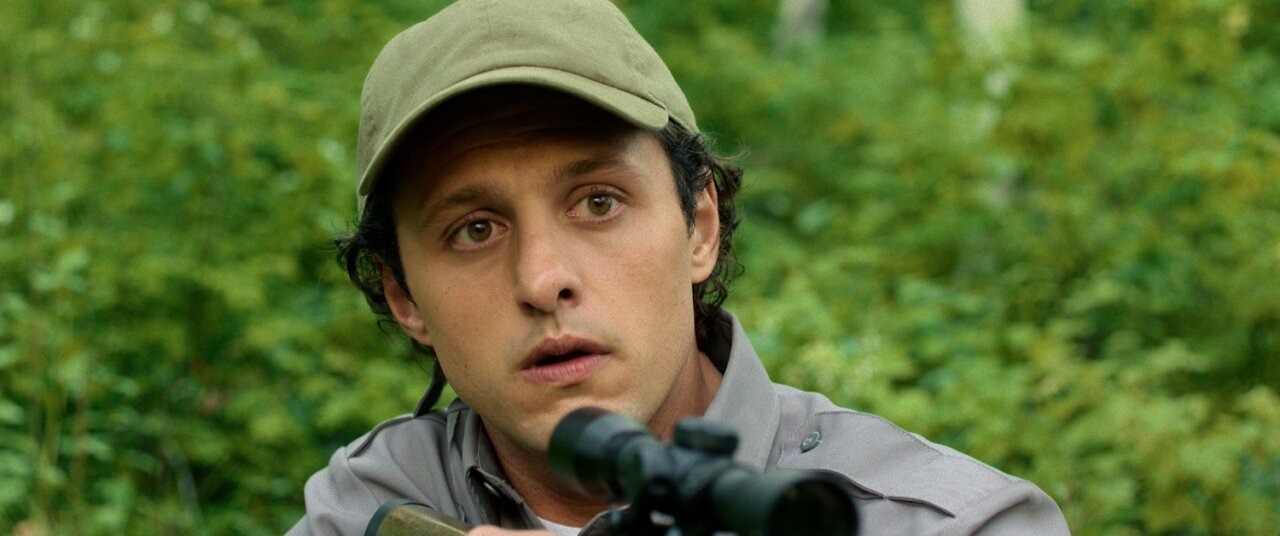
We are introduced to Joan Devereaux (Lauren Call), a rookie ranger trying to prove herself, and Gary Bunney (Charles Esten), the veteran in the watchtower. Unlike the highly qualified team we see in films like Cocaine Bear or even the recent thriller Lookout, these rangers seem… less than prepared. There is a scene where a tourist is struggling with a walkie-talkie, and the ranger has to explain she’s holding it too close to her face.
It feels like a time-wasting exercise rather than character building. When the attacks start, everyone acts surprised. I mean, it’s been 50 years since an attack, sure, but when you garnish the ground with bacon grease, you shouldn’t be shocked when a guest arrives for dinner.
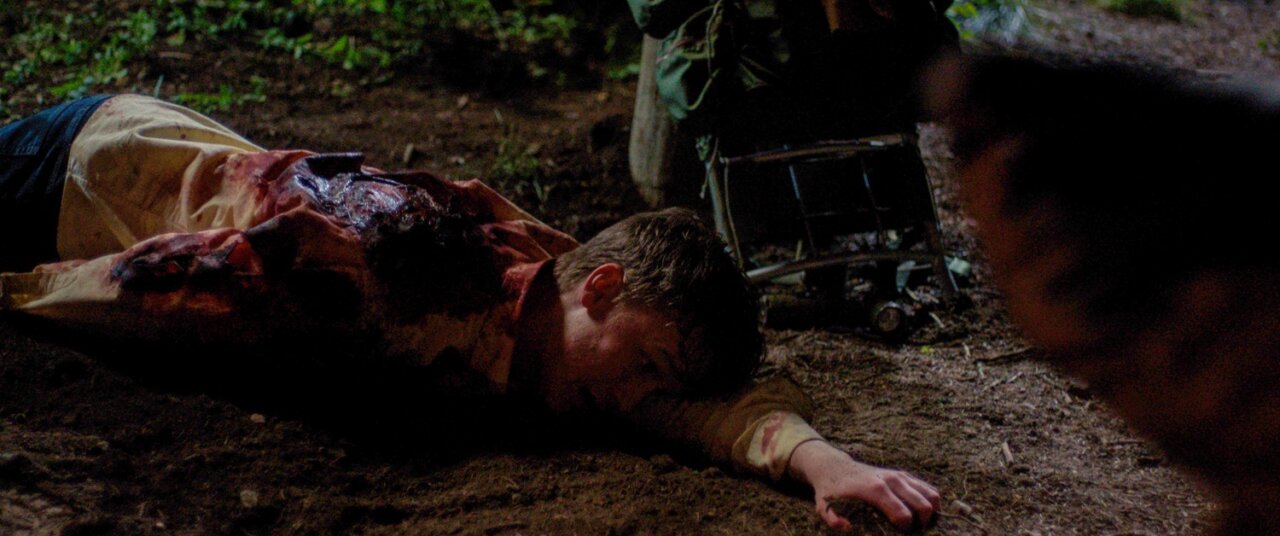
The tension plummets in the middle act. We have the first casualty, Julie, and Roy are attacked in their sleeping bags. The film uses a lot of ingenuity to replace expensive CGI, employing odd camera angles (camera on the ground) and sound design to imply the violence. We hear the growling, we see the aftermath, but we don’t get a full-blown creature feature showdown.
Julie is dragged away in her sleeping bag, a terrifying concept, but because the film hasn’t spent enough time fleshing out her character beyond “sweet girl with a boyfriend,” the emotional impact of her eventual death (after receiving last rites from Father Connolly) is dulled. I know her as well as the tourists know her, which is to say, hardly at all.
Meanwhile, back at the campsite, the logic takes a holiday. A bunch of tourists, in the middle of the night, decide to hunt bears with a fire pit. They literally carry it to create a fortress. At one point, it seems they are building a signal fire for a helicopter, but then there’s confusion about whether the chopper can land. It’s absurd and feels like a budget constraint workaround.
The dialogue from Gary, intended to be prophetic and deep, something about hibernation and how they never had to worry before, falls flat. It’s not deep; it’s negligence. The tragedy here isn’t just nature’s fury; it’s that the situation was entirely preventable.
The Claws and the Flaws
The film tries to pivot to a mystery with the second group. We learn that Michelle Koons (Ali Skovbye), who works at a laundromat (a detail thrown in so casually it’s almost funny), is missing. Spoiler alert: Michelle didn’t make it. The search for her feels like an afterthought compared to the drama at the chalet.
The finale tries to wrap this up with a “based on a true story” bow. We see text on the screen explaining the 1967 “Night of the Grizzlies” and how it changed park management forever. The final shots show the rangers, including Josh Zuckerman’s character, going out to kill the bears, including a baby bear, under the pretense that it would die without its mother. It’s a grim note to end on.
The real kicker, and the part that should have been the focus of the entire movie, is the revelation that the bears were habituated to humans because the chalet was essentially feeding them to entertain tourists. One bear had glass shards in its mouth from eating trash. This context is dropped in the final moments.
If you got bored and turned it off early, you’d miss the entire point of the film: this wasn’t just a random attack; it was a man-made disaster. Cocaine Bear took a snippet of truth and went wild; Grizzly Night sits in a weird stratosphere where it’s too serious to be campy but too thinly scripted to be a gripping docu-drama.
Ultimately, Grizzly Night suffers from “Narrative Narcolepsy.” It has a great premise and a solid cast, but it refuses to wake up and smell the garbage bags. It’s a film about the terror of nature that accidentally becomes a film about the stupidity of management.
Grizzly Night is rated:
2 Unsecured Garbage Bags out of 5
A survival thriller that wrestles with its true story origins, yet stumbles in pacing and narrative depth. Fans of nature-based horror may find enough grit and atmosphere to warrant a watch, but those seeking a taut, polished thriller might feel left wanting.
Filmmaker Stamps & Trivia
Burke Doeren’s debut feature demonstrates an eye for atmosphere and practical location use. Co-writers Katrina Mathewson and Tanner Bean bring a restrained, fact-based approach, though the screenplay sometimes struggles to balance exposition with suspense. Cinematographers Mitchell and Start’s work deserves special mention for their ability to capture the wilderness nightfall.
Interestingly, the film’s release by Saban Films and Lightbulb Film Distribution positions it within the growing niche of indie survival thrillers rooted in real events. It’s a genre recently popularized by titles like Cocaine Bear and The Ritual. Unlike its more flamboyant peers, Grizzly Night opts for a somber, thriller tone.
Need more bear-induced tension?
If Grizzly Night piqued your curiosity for survival thrillers or nature horror, consider these similarly themed films:
- Cocaine Bear (2023) – A wild, absurd take on a true story of a bear on drugs
- The Edge (1997) – A tense survival drama pitting man against nature and grizzlies
- Backcountry (2014) – A harrowing tale of a couple lost in bear country
- The Ritual (2017) – A chilling blend of folklore and wilderness terror
- Primate 2026 – An emotional support ape gets rabies.
Streaming Options and Verdict for Grizzly Night 2026
Grizzly Night Roars with Charm but Tumbles in Tension
Grizzly Night ambles along with earnest intent but gets tangled in its own underbrush. The bear horror promise is there, yet the tension often hibernates, leaving moments more puzzling than petrifying. Still, the cast and rustic setting claw back some charm from the wilderness, making it a watchable if uneven trek into nature’s dark woods.
“Grizzly Night is a raw, atmospheric survival tale that captures nature’s unforgiving power, if only it could sustain its tension.”
Grizzly Night
Director: Burke Doeren
Date Created: 2026-01-30 20:13
2
