Film Title: Mamochka
Cast: Alexander Kollar (Mark Gajewski), Maya Murphy (Jane Gajewski), Joshua Danskin (Derek), Dino Castelli (Mysterious Stranger/Delivery Driver)
Director: Vilan Trub
Writer: Vilan Trub
Distribution: TRUB Film Company
Production: TRUB Film Company (14-day shoot)
Release Date: January 27, 2026 (Prime Video, US); Festival premiere February 16, 2026 (Horror on the Sea Film Festival, UK)
Runtime: 92 minutes
Review by: Mother of Movies
This review discusses the film’s thematic ambiguities and key narrative turns. If you prefer to enter the doll’s world completely unspoiled, bookmark this and come back after you’ve watched.
Screener provided by filmmaker during Horror on the Sea Film Festival (UK premiere: 16 February 2026). Scheduled for US release on Prime Video, 27 January 2026.
The Inheritance Nobody Wanted
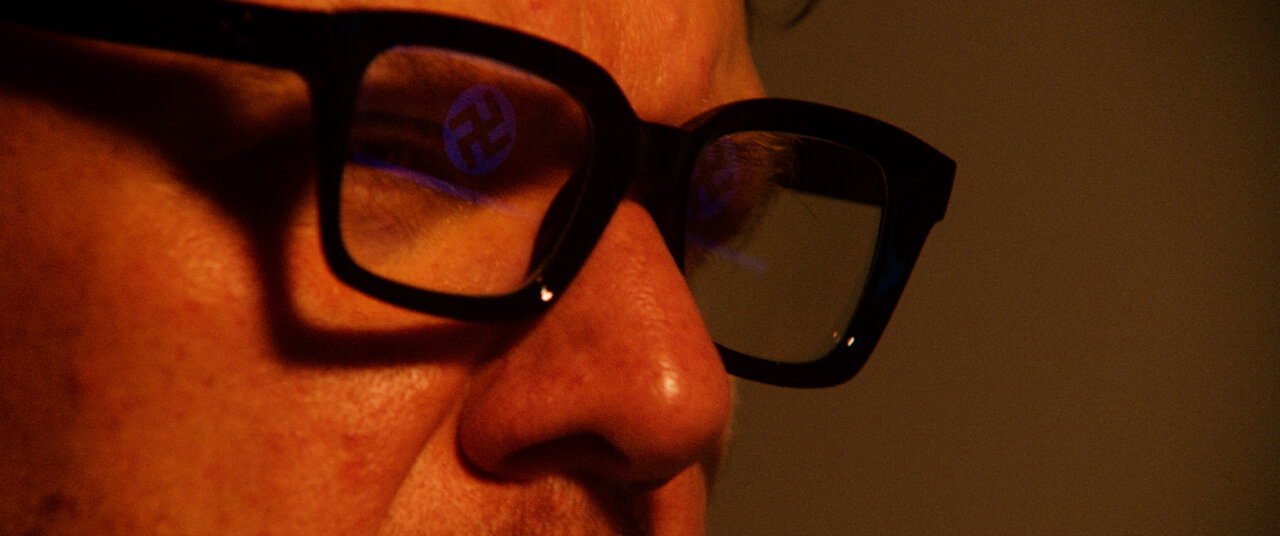
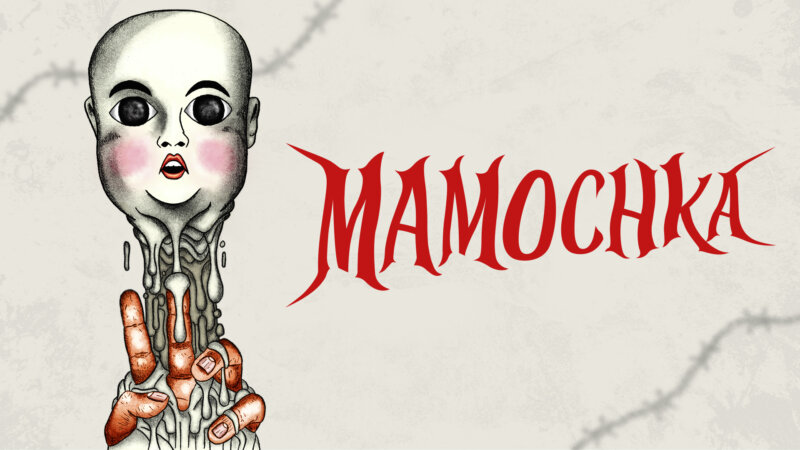
Mamochka arrives like an unwelcome heirloom, a Nazi-era doll passed down through generations, carrying with it the weight of history, mania, and the question of whether evil can be inherited or merely imagined. Director Vilan Trub (who also penned the script) has crafted a psychological horror that operates in the murky space between possession and paranoia, where the line between what’s real and what’s projected becomes increasingly irrelevant.
The film opens with a funeral, sparse, soundless, and filtered through the eyes of young Brian, who arranges toy soldiers on tombstones like a general conducting a war on the dead. It’s a striking image that immediately establishes the film’s thematic DNA: childhood innocence corrupted by inherited trauma, play weaponized into something darker. When Mark and Jane return home with a box containing Jane’s inheritance, that aforementioned doll, the machinery of psychological unraveling begins its slow, deliberate turn.
When Obsession Takes Human Form
What makes Mamochka particularly effective is its refusal to play by the rules of conventional haunted object narratives. This isn’t a film where a doll walks around murdering people in increasingly creative ways. Instead, Trub uses the pretty hand-me-down doll as a catalyst for fascination, a mirror held up to Mark’s own descent into paranoia and fractured reality. Alexander Kollar’s performance captures this deterioration with unsettling precision, the way his eyes narrow when examining the doll’s provenance, the tremor in his voice when recounting nightmares that loop back on themselves like a record skipping.
The nightmare sequences deserve particular mention. Rather than relying on jump scares or grotesque imagery, Trub constructs these moments as recursive loops. These dreams that feel real mirror the film’s larger preoccupation with why people get fixated with things. The way certain thoughts become inescapable, the way we replay trauma until we can no longer distinguish memory from invention. But does Mark have any trauma at all?
The Real Horror Beneath the Surface
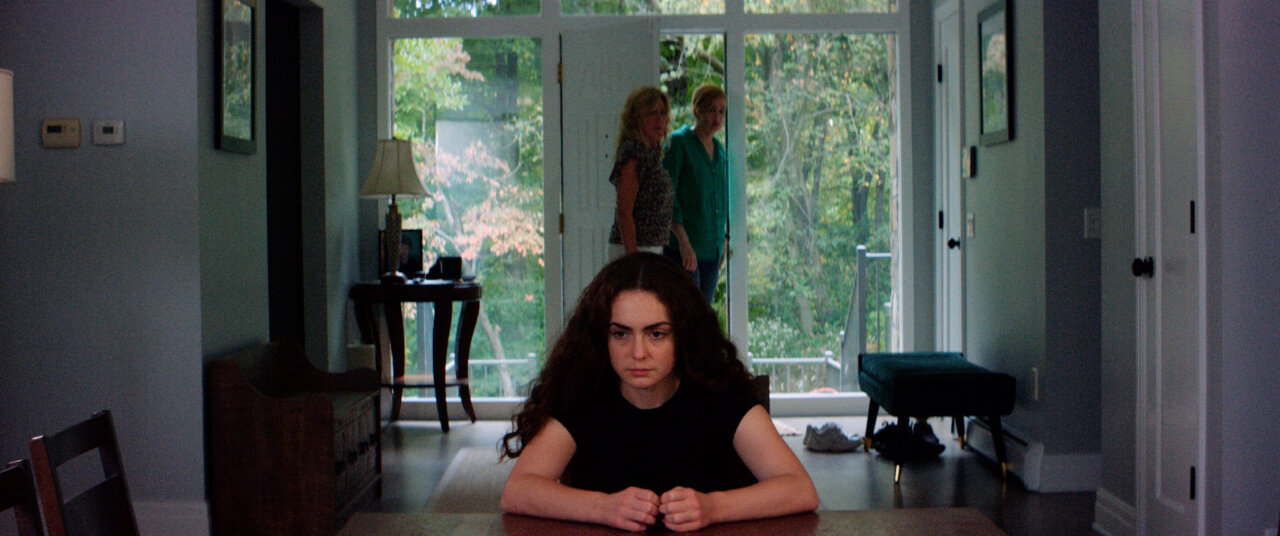
Maya Murphy’s Jane operates in a different register entirely. She’s the pragmatist confronted with her husband’s spiraling fixation while trying to understand her past. As Mark digs into the doll’s history, his wife is on her own journey, one that is filled with a fractured relationship and a babysitter that thinks her son is evil.
The pacing is deliberately measured, sometimes glacial. At 92 minutes, the film somehow manages to feel both economical and expansive. Quick cuts and frenetic editing would undermine the creeping sense of wrongness that permeates every frame. Instead, the camera lingers. It watches. It waits. It closes in so much that you expect the characters to hit the lens.
Where Mamochka becomes unsettling is in its treatment of ambiguity. The delivery driver who appears late in the film, played with a too-wide smile by Dino Castelli, exists in a space between hallucination and reality. Is he a ghost? A reincarnated Nazi? A manifestation of Mark’s fractured psyche? The film refuses to answer, and in that refusal, it becomes something more interesting than a straightforward supernatural thriller. It’s an exploration of how obsession rewrites reality, how the stories we tell ourselves about the past can colonize the present.
Ambiguity as a Weapon
That said, the film’s deliberate evasiveness occasionally tips into murkiness. The subplot involving Sarah, the babysitter who encounters Brian while babysitting, eerily saying he just wants to play, and emerges traumatized, dangles unanswered questions that feel less intentional and more like loose threads. Similarly, the various characters who orbit Mark’s investigation (his friend from the bar, the medium, the doll doctor) sometimes feel like they’re operating in different films entirely. In a 14-day shoot, this kind of narrative economy is understandable; it also means some character arcs feel abandoned rather than deliberately truncated.
The dialogue occasionally strains under the weight of what the film is trying to communicate. However, this is a film that’s clearly more interested in mood and metaphor than plot mechanics, but it’s worth noting. When a film operates this much in subtext, the moments where it reaches for meaning feel slightly jarring.
The sound design and score (featuring “I Don’t Want to Give You Up” performed by the JK Collective) work nicely to create an atmosphere the alternate universe I think the filmmaker was going for. Press notes say the cast are mostly comedians on purpose, and there’s a precision to the audio landscape that suits this vision, even when the narrative itself resists clarity.
What ultimately lingers about Mamochka is its central idea. That some inheritances can’t be refused, and some passions can’t be cured by simply destroying their object. The doll may or may not be haunted. Brian may or may not be evil. Mark may or may not have lost his mind. What matters is that once you’ve let certain ideas in, they metastasize. They become part of the architecture of your reality.
Inherited Dread & Fractured Reality
Mamochka is what happens when a filmmaker trusts their audience to sit with ambiguity. A psychological horror that refuses easy answers, where the doll may be haunted or the protagonist may simply be unraveling, or the kid might really be evil and somehow, all interpretations feel equally right.
Vilan Trub Fingerprint
Vilan Trub is a Queens-born director and writer whose work traverses the intersection of obsession, perception, and identity. A former music video director in hip-hop and electronic music spaces, Trub brings a visual sensibility honed through short-form storytelling to feature work, where fractured perspectives and unreliable narrators define his approach. Mamochka extends his interest in how individuals project meaning onto external forces, particularly when those forces (objects, people, environments) become mirrors for internal darkness. Mamochka is unmistakably a filmmaker’s passion project.
Notable Buzz: The film premiered at the Horror on the Sea Film Festival (February 16, 2026) before its wider release on Prime Video + Flix Fling (January 27, 2026, in the US). The short version of the trailer has a QR code for direct viewing.
Mamochka may not fully answer the questions it raises, but it asks them with enough conviction to make the journey worthwhile. For viewers who appreciate psychological horror that prioritizes mood and ambiguity over explanation, Trub’s film offers disquieting thoughts on desire, evil, and the stories objects tell.
Inherited Dread & Fractured Reality
Mamochka is what happens when a filmmaker trusts their audience to sit with ambiguity. A psychological horror that refuses easy answers, where the doll may be haunted or the protagonist may simply be unraveling, or the kid might really be evil and somehow, all interpretations feel equally right.
Best Psychological Horror Films Like Mamochka
Need More Inherited Dread? Try These Psychological Horrors:
- Hereditary (2018) — Ari Aster’s masterpiece of familial trauma and supernatural unraveling. Like Mamochka, grief becomes a monster.
- The Babadook (2014) — Jennifer Kent’s Australian gem, where a children’s book monster may or may not be real. Same ambiguity, same dread.
- The Wailing (2016) — Na Hong-jin’s Korean horror that refuses answers. Compulsion, paranoia, and inherited sins collide.
- Incendies (2010) — Denis Villeneuve’s brutal exploration of inherited violence and family secrets across generations.
- Phobia (2013) – A character study on madness.
- Daddy’s Head (2024) – A young boy grieves, and what might be his dad or might not be is up to you to interpret.
- A Creature Was Stirring (2023) – It’s set at Christmas, but you can still watch it. Is this monster real?
- 1BR the Apartment (2022) – Sarah thinks she is going crazy. There’s something definitely wrong in this apartment block.
Trailer
Mamochka
Director: Vilan Trub
Date Created: 2026-01-16 20:45
3
