

There’s something deeply unsettling about watching a Lionsgate-distributed creature feature that looks like it was filmed in someone’s backyard pool with a budget that wouldn’t cover a decent aquarium visit. Killer Whale (2026) arrived in theaters with the confidence of a blockbuster and the execution of a SyFy original that got lost on its way to Saturday afternoon obscurity.
This review discusses specific scenes, questionable CGI choices, and plot developments that might save you 90 minutes. If you’re determined to witness this aquatic disaster firsthand, proceed with caution, or a life vest.
The film opens promisingly enough at World of Sedo, a SeaWorld-adjacent theme park where handlers discuss their star attraction, Sedo, an orca who’s been acting increasingly hostile since losing her calf under mysterious circumstances. One handler decides to take a late-night swim, presumably to commune with her cetacean friend, only to become the opening credits’ first casualty. It’s a decent hook that briefly suggests we might be in for something resembling Blackfish meets Jaws, a commentary on captivity wrapped in creature-feature thrills.
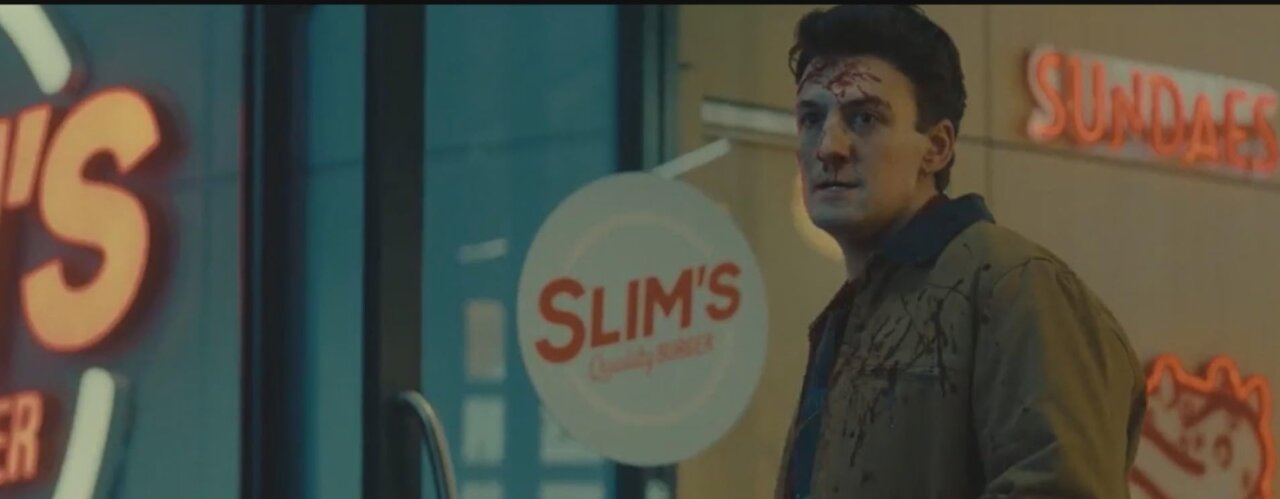
Then the film cuts to Maddie (Virginia Gardner) and her boyfriend Chad (Isaac Crawley) flirting in a burger shack after hours, and we’re suddenly in a different movie entirely. A robbery occurs, Chad dies, and Maddie survives with hearing damage that requires aids. Flash forward one year, and her friend Trish (Mel Jarnson) convinces her to take a vacation to the island where Sedo now supposedly lives in a small enclosure after being captured from captivity.
When Green Screens Attack Harder Than Orcas – Killer Whale
The problems begin the moment our protagonists hit the water. What should be sun-drenched island paradise footage instead looks like actors standing in front of a particularly unconvincing digital backdrop. The “cursed beach” that local bar guy Josh (Mitchell Hope) takes them to features soft edges and bokeh that scream studio tank rather than open ocean.
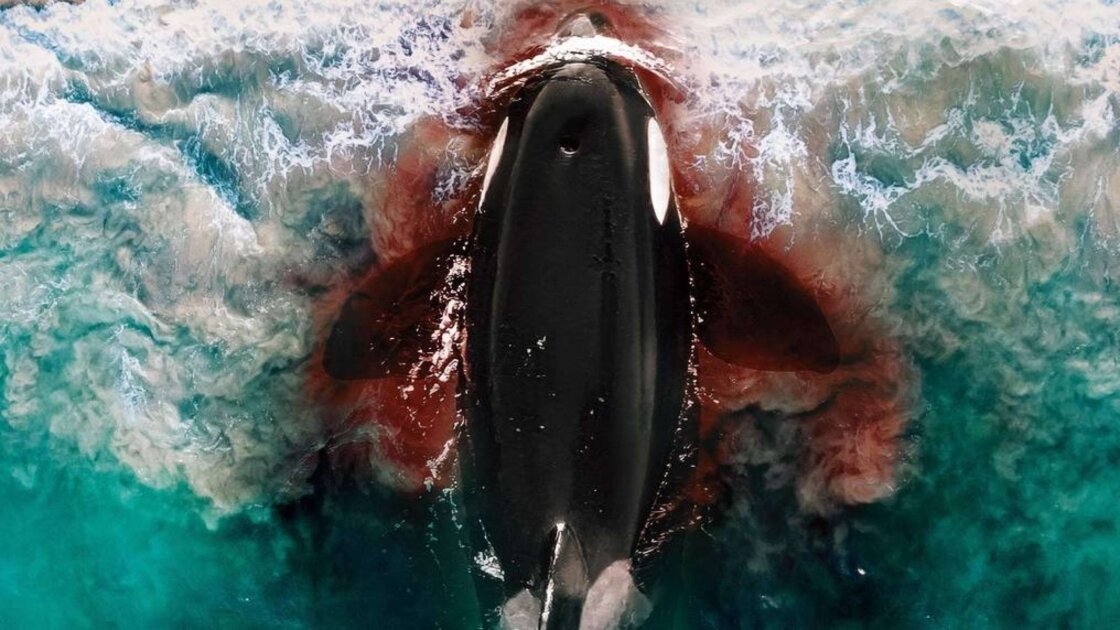
When the orca attack finally happens, it’s less terrifying than bewildering. The creature effects oscillate between passable and laughable, with Sedo’s fin cutting through water that never quite behaves like actual liquid. The inflatable pizza slice that becomes Maddie and Trish’s temporary refuge feels more substantial than the digital whale circling them. At one point, the orca blows blood on the survivors, a moment that should be visceral but instead plays as the least plausible thing an Orca would do.
Narrative Narcolepsy and Manufactured Drama
Perhaps the most baffling choice in Killer Whale is its approach to character development and plot progression. After spending ten hours on the rock (which feels like ten hours in real time for viewers), Trish decides this is the perfect moment to confess that she orchestrated Chad’s death during the burger shack robbery. It’s the kind of melodramatic revelation that belongs in a completely different film, preferably one that earned such emotional beats through actual character work rather than desperate attempts at manufactured tension.
The besties spend a lot of time on the rock. They blow air into a plastic bag in the hope of a few drops in 4 to 6 hours, and they cut themselves scrambling on and off for different reasons. All the while, the Orca that could probably knock them both off with ease stays close enough for both girls to think the gig is up.
When Trish attempts to swim to shore and gets attacked, the geography becomes even more absurd. Sedo somehow grabs her in water shallow enough that the orca should be beached, then drags her into deeper water like some kind of aquatic magic trick. Trish manages to crawl back onto the beach to bleed out in the middle of the SOS she just drew, a moment that aims for poignant but lands somewhere between unintentionally comedic and deeply frustrating.
Virginia Gardner Deserves Better Material
To her credit, Virginia Gardner does what she can with material that gives her almost nothing to work with. She sells Maddie’s grief, her fear, and her eventual determination to survive despite being stranded on progressively smaller rocks with a murderous orca circling below. I read on Letterboxd a review that suggested Maddie’s tears were a hard sell, too. Especially after she admitted to being the person responsible for her boyfriend’s death.
There’s a moment where Maddie and Sedo lock eyes across the water that hints at the film this could have been, something exploring the intelligence and emotional depth of these creatures, the trauma of captivity, the cycle of violence between humans and nature. Instead, we get Maddie seizing her moment at nightfall, conveniently finding Trish’s waterproof phone underwater and stabbing the whale with “a long pin thing” from her friend’s bag. She also manages to locate these things underwater. Because of course she does.
It’s the kind of resolution that suggests the writers had no idea how to end this story, so they just… ended it. Helicopter rescue, flash forward to Maddie playing viola solo in tribute to her dead friends, whale necklace prominently displayed. Credits roll.
The supporting cast exists primarily to die, and Mitchell Hope’s Josh is the standard-issue local with warnings about cursed beaches who plies the tourists with pills before taking them on a fatal jetski adventure. The handlers at World of Sedo speak in ominous foreshadowing without ever developing into actual characters. Even Chad, whose death supposedly motivates the entire plot, barely registers as a person before becoming a ghost that haunts Maddie’s journey.
Lionsgate’s Theatrical Gamble on Theatrical Disasters
What’s perhaps most puzzling about Killer Whale is its existence as a Lionsgate theatrical release. This is the distributor that brought us the Hunger Games franchise, John Wick, and Knives Out, films that understand how to balance commercial appeal with actual craft. Yet here they are, releasing a creature feature that looks like it was assembled from leftover assets and good intentions.
The film wants to be a commentary on captivity and animal cruelty, evidenced by the opening and glossed over now and then. The suggestion is that the orca is hunting humans because it “doesn’t know it’s free.” But that thematic thread gets tangled up in a survival thriller that can’t decide if it’s The Shallows or 47 Meters Down, ultimately achieving neither film’s tension nor competence.
There’s a version of this story that works, one that explores the psychological toll of captivity on intelligent creatures, the complicity of entertainment industries in animal suffering, the way trauma ripples through ecosystems both aquatic and human. That film would require writers willing to commit to their premise rather than pivoting to best-friend betrayal melodrama halfway through.
Technical Deficiencies That Sink the Ship
The cinematography in Killer Whale suffers from an identity crisis, unable to decide whether it’s shooting a thriller or a soap opera. Aspect ratios shift inexplicably between scenes. The lighting during night sequences is so flat that it’s impossible to feel any genuine danger or atmosphere. When Maddie sneaks around in the dark looking for the jetski, alonng with other items she uses to survive, she finds them almost immediately despite the setup suggesting it should be nearly impossible to locate.
The score does its best to inject tension into scenes that desperately need it, but even the most dramatic orchestral swells can’t save effects work that looks unfinished. When Sedo’s fin breaks the surface, the water doesn’t react properly. When the orca attacks, the splashes feel disconnected from the action. It’s the kind of technical shortcoming that pulls viewers out of the story every single time, reminding us that we’re watching actors pretend to be afraid of something that will be added in post-production, except it never quite got added convincingly.
The pacing lurches from scene to scene without any sense of rhythm or escalation. We spend what feels like an eternity watching Maddie and Trish sun themselves on rocks (complete with sunburn makeup that appears and disappears) while the film forgets it’s supposed to be building toward something. Then suddenly we’re rushing through the climax, with Maddie’s escape and rescue happening so quickly it barely registers.
Studio Tank Catastrophe
Killer Whale is what happens when a creature feature forgets to include convincing creatures. With effects that make SyFy originals look prestige and a plot that pivots from animal rights commentary to melodramatic betrayal, this Lionsgate misfire sinks faster than its protagonists’ jetskis.
Worst Shark Movies 2026
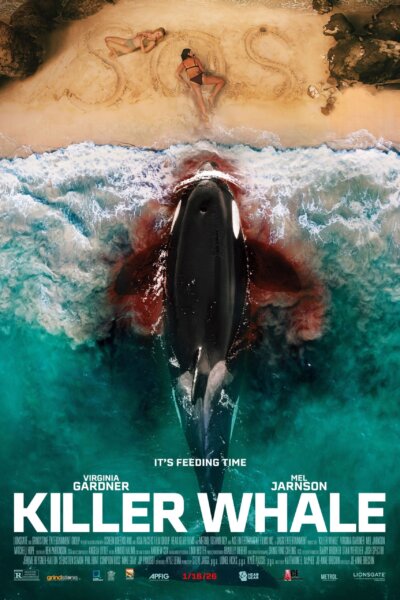
Jo-Anne Brechin directs Killer Whale, and unfortunately, this review is not the usual glowing kind. Co-writing with Katharine McPhee, Brechin attempts to juggle multiple genres and themes without the technical skills or budget to pull off any of them convincingly. The desire to create both a creature feature and some wafer-thin musings on trauma. The execution suggests neither filmmaker was quite ready for a theatrical release of this scale. Or they were, and they just didn’t think it through.
Given the similar setup to one of my favourite films, The Shallows, I began to think they were only written in to make the story different. Well, that, and the opening sequences, which initially filled me with hope of another neat underwater horror movie.
The online discussion of ‘Killer Whale’ has been minimal, which speaks volumes about its theatrical impact since its release on January 16th. The few reviews that exist focus primarily on the technical deficiencies and the wasted potential of its premise. Some animal rights activists have noted the film’s attempt to address orca captivity, but criticize its superficial treatment of the subject, using real-world animal suffering as window dressing for a generic thriller, which undermines any genuine commentary the filmmakers might have intended.
Sadly, I was really excited to see this, and Killer Whale is perhaps the worst movie so far of 2026
Killer Whale is rated
1 Inflatable pizza slices offering more protection than the plot out of 5
Watch it as a rental, but I recommend waiting for it to be streaming free.
Similar Titles: Mother of Movies, Scream, and Float Films
Did you survive Killer Whale and want more creature features?
The Shallows (2016) – Blake Lively versus a great white shark delivers actual tension, convincing effects, and a protagonist worth rooting for. Everything this film aspires to be but isn’t.
47 Meters Down (2017) – Mandy Moore and Claire Holt are trapped in a shark cage at the ocean floor. Claustrophobic, tense, and technically competent in ways that make Killer Whale look even worse by comparison.
Crawl (2019) – Kaya Scodelario fighting alligators during a hurricane. Alexandre Aja understands how to make confined creature features work on modest budgets with maximum impact.
The Meg (2018) – Jason Statham punching a prehistoric shark. It’s ridiculous, but it knows it’s ridiculous and leans into the absurdity with competent effects and genuine entertainment value.
Scream and Float – All Mother of Movies tagged films that have something to do with screaming and floating. Not just water. Find tags at the end of every post.
- Review by: Mother of Movies
- Cast: Virginia Gardner, Mel Jarnson, Mitchell Hope, Mia Grunwald, Ron Smyck, Isaac Crawley, Aliandra Calabrese, Scott James
- Director: Jo-Anne Brechin
- Writers: Jo-Anne Brechin, Katharine McPhee
- Distribution: Lionsgate (USA), Rialto Distribution (Australia). Watch the film trailer on YouTube
- Production: Head Gear Films, Jaggi Entertainment, Metrol Technology
- Release Date: January 16, 2026. Direct to streaming for rental or purchase.
- When Lionsgate and Rialto acquired distribution rights, one had to wonder if anyone actually watched the finished product or if they were banking entirely on the creature-feature genre’s built-in audience appeal.
Killer Whale
Director: Jo-Anne Brechin
Date Created: 2026-01-26 21:01
1
