
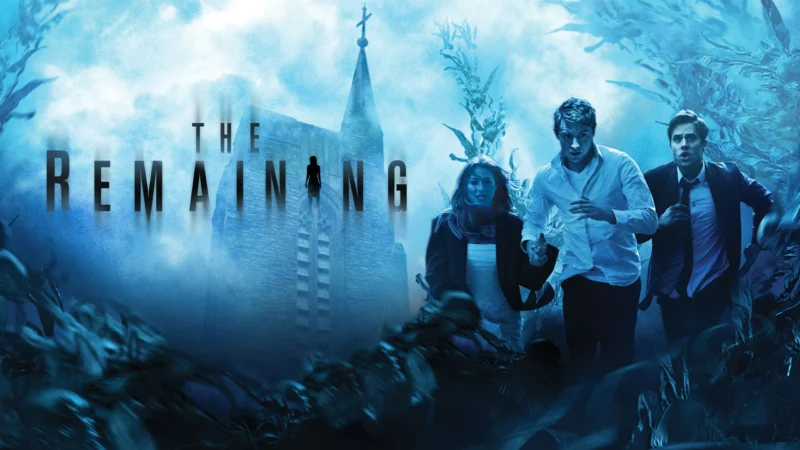
Welcome to the cinematic underbelly, where Mother of Movies pulls back the curtain on the good, the bad, and the utterly bizarre that flicker across our screens. In a landscape teeming with genre offerings, some films aim for the heavens, others for the digital depths, and many simply fall flat. The Remaining (2014) is an apocalyptic faith-based horror.
The Remaining (2014) – A Rapture of Disappointment?
Content Warning: This review discusses a film that contains scenes depicting infant death and graphic, albeit often off-screen, violence. e ready for the dark, or step back for a spoiler-free ride.
Wedding Bells and Biblical Blight: The Remaining’s Rocky Start
The Remaining, directed by Casey La Scala, opens on a deceptively joyous note: a pre-wedding celebration. The scene is brimming with happy people, cameras, and all the trappings of a festive occasion. This setting, typically associated with new beginnings, serves as a stark contrast to the impending chaos. For any horror film to truly resonate, particularly one promising violence, a foundational understanding and connection with its characters is kind of important. Without this, their subsequent demise or suffering fails to evoke genuine concern.
The film introduces its core ensemble: Kate, her partner Tom, the bride Skyler, and Skyler’s parents, along with the groom Jack. The celebratory atmosphere is abruptly shattered by a series of events: an earthquake, lightning, and initial allusions to an alien attack. This immediate shift to terror, however, struggles to land its emotional punch. While the film attempts immersion through grainy cinematography, flirting between a jarring first-person perspective and more conventional camera angles, the destabilizing effect it aims for often translates into disorientation. This stylistic choice, intended to heighten realism, quickly loses its impact, and instead, I felt fatigue rather than sustained dread.
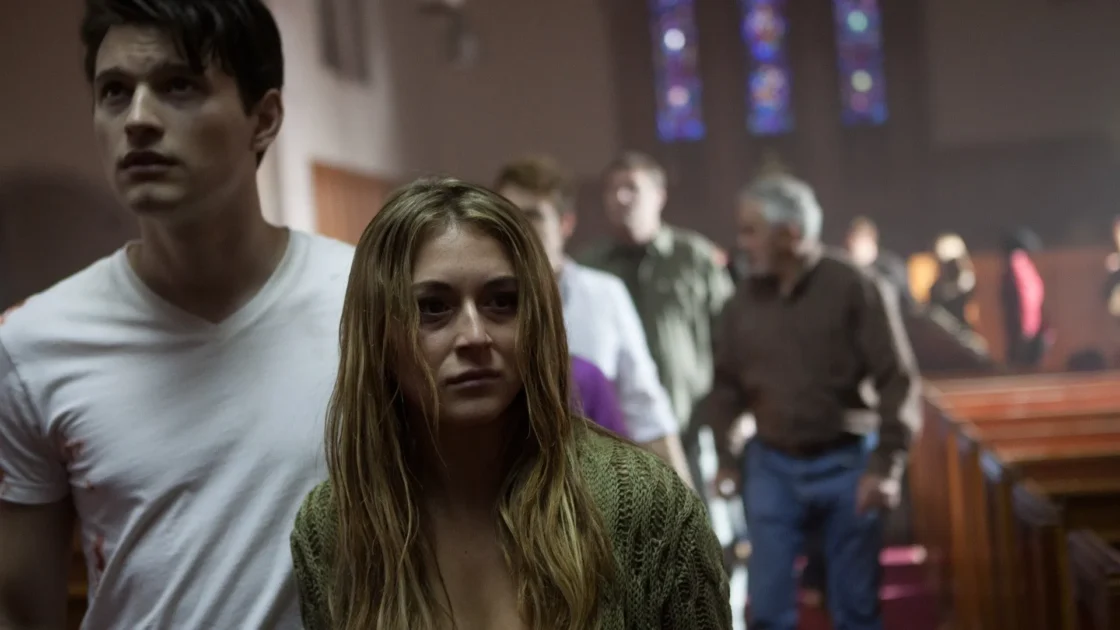
As chaos kicks off, Skyler quickly declares the unfolding events to be “the Rapture”. This immediate, definitive pronouncement of a theological explanation, especially when the character later appears bewildered by subsequent events, had me slack-jawed in the wrong type of way. The narrative’s internal logic was broken. This religious framing is later reinforced when survivors gather in a church. The attending priest also confirms the events as the Rapture. The Remaining immediately signals its overt religious leanings, which significantly influences its storyline.
The Rapture’s Reality Check: Faith, Fear, and Flawed Filmmaking
As the film progresses, it offers two initial speculations for the giant hailstones raining down, yet quickly settles on a Biblical ending, where the good people are gone and all the bad people are alive. Skyler, despite her earlier certainty, questions her faith and good deeds, like anyone would, when a minority group decides what everything means. Why she remains alive amidst the hail and fire mixed with bullets cracks her right open. This internal struggle is often presented didactically rather than organically, leading to a rapid loss of momentum.
The film shakes between generic apocalyptic tropes and its inconsistent found-footage style.
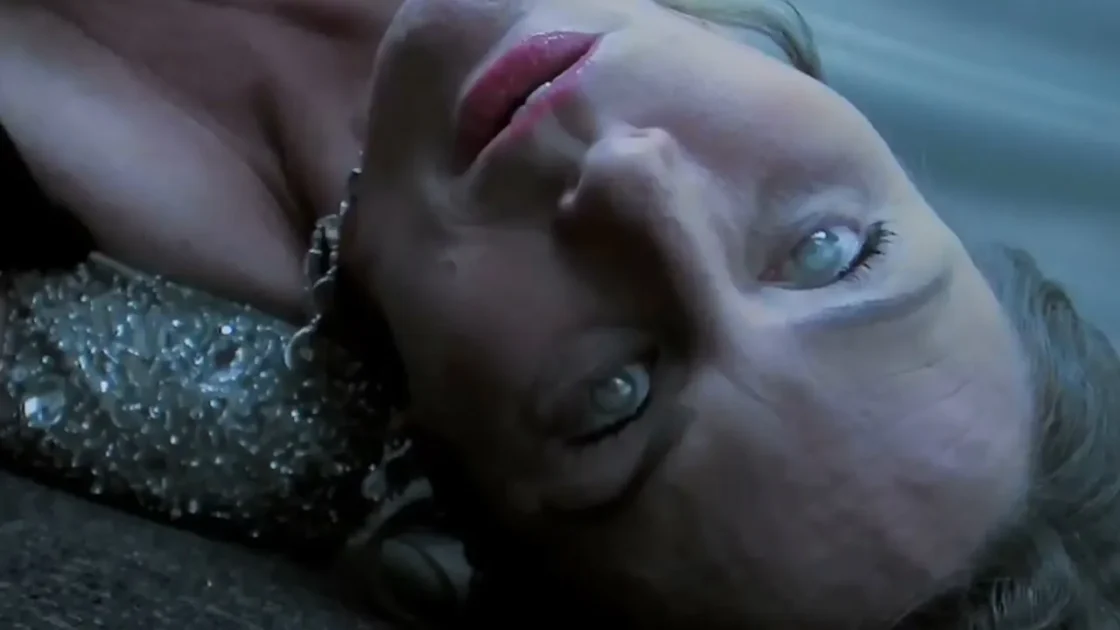
A pivotal plot development arrives with a radio announcement of Instant Death Syndrome. To support this label, The Rapture depicts children across the globe dropping to the ground with grey eyes. This device, while attempting to convey widespread devastation, feels like a convenient means to explain mass casualties without deeper exploration. But to make sure there are no arguments, characters are then shown reflecting on their sins and moral standing. This overt focus on religious doctrine, with the pastor sermonizing about the Rapture and Jesus, can become tiresome. Sometimes it feels like a sermon rather than a compelling horror experience. The pastor’s assertion that the deceased have been “saved” further solidifies the film’s specific theological stance.
The film’s commitment to its faith-based narrative is understandable given its distribution by Affirm Films, an “industry leader in faith-based/inspirational films”. This commercial and ideological positioning shapes the film’s core purpose, often prioritizing its message over nuanced storytelling. Consequently, while it may resonate with its target demographic, it risks alienating broader audiences seeking more complex character arcs or less explicit exposition. The film’s primary goal appears to be delivering a specific message, which frequently comes at the expense of organic plot development and genuine suspense. This approach, where the narrative tells rather than shows its core conflict, contributes to the film’s struggle to maintain audience engagement.
Visuals, Vexations, and a Vanishing Budget: Deconstructing The Remaining
On a technical level, The Remaining presents a mixed bag. The practical makeup effects are described as meh but solid, indicating a level of competence without being particularly remarkable. A common horror trope, the dramatic “ripping off dressings to show a big wound,” is employed, raising questions about its continued relevance or necessity.
Visually, observations of misty oranges and changes in the color of mist scream budget restraints and suggest limitations in the film’s production design. However, the presence of “cars in large numbers” offers a slight counterpoint. This aligns with external critical commentary that the film blows [s] its budget on the first wave of destruction,” forcing characters to hole up in a chapel thereafter. This common challenge in lower-budget apocalyptic films means an initial burst of impressive effects is often followed by a retreat into contained, less visually dynamic settings, leading to a noticeable drop in visual interest and tension as the film progresses.
Despite its R-rating, the film’s violence is surprisingly off-screen for the most part, except for a kid thing. Dark scenes often employ a Green Rec style, and a character, Father Shea, is heard getting ripped apart off-screen after a final “pray for me”. This frequent reliance on off-screen violence, while sometimes a deliberate artistic choice, here feels more like a practical budgetary compromise than a stylistic one, ultimately impacting the horror experience. The film’s initial premise promises a certain level of genre intensity, but then pulls its punches and relies heavily on implied rather than explicit violence.
The Aftermath: Why The Remaining Fell Flat
The Remaining culminates in a heavy-handed climax where characters are forced to choose their faith, with immediate and often fatal consequences. A character who attempts to articulate that the monsters are attracted to faith is killed immediately, as a direct consequence of not making the right choice. The already clunky narrative reinforces the film’s undertone, leaving little room for subtlety or organic character development.
The film’s obscurity is perhaps best explained by the observation that 2014 was a peak time for this type of film, suggesting it was lost in a crowded market of similar apocalyptic or faith-based narratives. External reviews echo this, labeling it a “minor entry in the Rapture cycle with a soul… already circling the 24-hour garage bargain bin.
Casey La Scala directed and co-wrote The Remaining. His directorial filmography includes Grind (2003) and Amityville 1974 (2020), and he served as a producer on Donnie Darko (2001). The main cast features Johnny Pacar, Shaun Sipos, and Bryan Dechart, with Alexa Vega also appearing. Distributed by Affirm Films and Sony Pictures Worldwide Acquisitions (SPWA), SPWA’s role in acquiring and producing films for various distribution platforms, including VOD and home video, further explains the film’s likely path to obscurity, particularly for a PG-13 film in a genre often associated with R-rated content.
The film’s primary objective is to deliver a specific theological or moral message; it frequently sacrifices character development, complex plotlines, and genuine suspense to do so. Instead, The Remaining felt preachy, predictable, and ultimately unengaging. Even with a potentially interesting premise, poor execution, a heavy-handed message, and a lack of memorable elements led to this film being forgotten quickly.
Director: Casey La Scala
- Writers: Casey La Scala, Chris Dowling
- Main Cast: Johnny Pacar, Shaun Sipos, Bryan Dechart, Alexa Vega
- Distribution: Sony Pictures Worldwide Acquisitions (SPWA), Affirm Films
- Release Date: 2014
- Film Title: The Remaining
- Review by: Mother of Movies
- Similar Review: Read this review from The Guardian
- If you love your faith and you love your horror, watch these next: Dui Shaw TV series | The House of the Devil | The Deliverance | Shadow of God
The Remaining
Director: Casey La Scala
Date Created: 2014-09-05 17:48
1
