
Sew Torn (2024) at a Glance
Cast: Eva Connolly, Callum Worthy, John Lynch, Kay Callen, Ron Cook
Directors: Freddie McDonald (Directorial Debut)
Writers: Freddie McDonald, Fred McDonald
Release Date: March 11, 2024 (SXSW), May 2025 (US Theatrical)
Produciton: Barry Navidi Productions
Distribution: Vertigo Releasing (United Kingdom), Sunrise Films (United States), Sew Torn Shudder Streaming Release Date TBC
Sew Torn Threads the Needle Between Dark Comedy and Absurdist Thriller
There are moments when a film arrives, seemingly out of nowhere, with a concept so delightfully unhinged you can’t help but lean in. Sew Torn, a screener that landed on my desk with the quiet confidence of a future cult classic, is precisely that film. My immediate reaction to the lead performance, I confess, was one of mistaken identity; my viewing notes initially screamed “a young Clea DuVall from Girl, Interrupted!” at me. The magnetic, brilliantly frazzled lead is, in fact, Eva Connolly, and she is an absolute revelation as Barbara Duncan, a woman whose life is held together by the most literal of fraying threads.
A World Unraveling at the Seams
Barbara lives a life embalmed by grief. She operates a talking picture frame shop, a business left to her by her deceased mother, and resides in the back, surrounded by recorded snippets of parental advice activated by pull-strings. “Get up,” a voice chirps from her bedside. “Wash your hands,” another demands in the bathroom. These disembodied commands are her routine, aural ghosts guiding her through a lonely existence. Her promise to “always keep the shop alive” is less a mission statement and more a ball and chain, especially as business is clearly failing.
The narrative needle scratches across the vinyl of her quiet despair when she’s called away to an appointment with Grace Fesler (Caroline Goodall), a bridezilla of monumental proportions. After being verbally eviscerated for being late, a button flies off Grace’s wedding gown, triggering another tirade. It’s this button, this seemingly insignificant catalyst, that sends Barbara on a drive that will irrevocably snip the fabric of her reality. On the road, she encounters a fresh crime scene: two men, a car crash, a gun, and a suitcase handcuffed to one of them. It’s here that Sew Torn presents its masterful gimmick. As Barbara contemplates her next move, the screen flashes with three choices: Perfect Crime. Call Police. Drive Away.
Not Quite Coen, Something Entirely Its Own
While it’s tempting to label the film’s blend of macabre humor and spiraling bad luck as ‘Coen-esque,’ doing so misses its most inventive quality. The Coen brothers are masters of fate, trapping their characters in a cruel but singular timeline where choices only tighten the knot of a pre-determined, absurd reality. Sew Torn does something fundamentally different. It doesn’t explore the illusion of free will; it explodes it into a genuine multiverse of consequence. This isn’t a story about characters struggling against an indifferent universe. It’s about a character becoming the architect of three different, equally chaotic ones.
This structural gamble transforms the film into a triptych of terror. It’s as if Sliding Doors had a frenetic, bloody lovechild with Run Lola Run, all elevated by a MacGyver-esque mobile seamstress. I was addicted to its sheer nerve. Each choice unfurls into its own distinct timeline, exploring the violent and darkly hilarious outcomes of Barbara’s decision. The film doesn’t just show us different paths; it fully commits to each one, creating three mini-movies that showcase both Barbara’s resourcefulness and the impressive absurdity of her situation.
A Triptych of Macabre Possibilities
The “Perfect Crime” route is where the film’s fantastical logic truly shines. Barbara, a master seamstress, becomes a sort of sewing-machine MacGyver. Using only needle and industrial-strength thread, she rigs the crime scene in a sequence so audacious it borders on slapstick, engineering a scenario where the two criminals effectively take each other out. It’s a moment of ludicrous genius, one that relies on an industrial-sized suspension of disbelief but is executed with such confidence that you just have to applaud it.
The “Call Police” and “Drive Away” scenarios are equally fleshed out, each introducing new dynamics and re-contextualizing characters like the wonderfully ancient Sheriff Angle (Kay Callen) and the menacing crime boss Hudson Armitage (John Lynch). The recurring button becomes a crucial plot device in each timeline, a clever throughline that binds these disparate realities together. The filmmakers, Freddie and Fred McDonald, display a remarkable control of tone, seamlessly shifting from quiet character moments to high-tension standoffs and back to black comedy without ever losing the plot’s thread.
A Fraying Final Seam
For all its structural brilliance, Sew Torn falters ever so slightly with one final stitch. After exploring its three main timelines, the film presents a fourth, almost tacked-on conclusion that feels like an unnecessary epilogue. The note in my pad simply reads: “Ugh, wish they had thought that last section through.” This final scene, meant to offer a neat, perhaps happier, resolution, inadvertently dilutes the potent ambiguity of the multiverse structure. It raises more questions than it answers and feels like a hesitant step back from the narrative cliff the rest of the film so bravely jumped off.
Despite this minor fraying at the end, Sew Torn is a triumph of independent filmmaking. It’s a viciously smart, wildly entertaining, and uniquely structured thriller that announces the McDonalds as a formidable filmmaking duo. Eva Connolly carries the film with a performance that is vulnerable, unhinged, and utterly compelling. It’s a complex, bloody tapestry, and one I couldn’t stop watching.
Take Our Poll

Sew Torn Movie Review 2024 Verdict
Sew Torn is rated:
4.5 Spools of Absurdist Mayhem out of 5
Excellent script, Pushed Into Explosive Details
Sew Torn is the kind of film you don’t expect much of and then it shows you a really good time. All the pieces fit neatly together alongside an excelent cast.
Filmmaker Stamp & Trivia
Sew Torn marks the feature-length directorial debut for the team of Freddie McDonald and Fred McDonald, who are noted in the credits as separate individuals but widely believed to be a father-son duo. Their primary filmmaker stamp, established here, is a penchant for high-concept, structurally ambitious narratives blended with dark, absurdist humor. They previously directed a short film by the same name in 2019, which served as the proof of concept for this feature. Their style demonstrates a clear confidence in visual storytelling and an ability to ground fantastical premises with relatable character desperation.
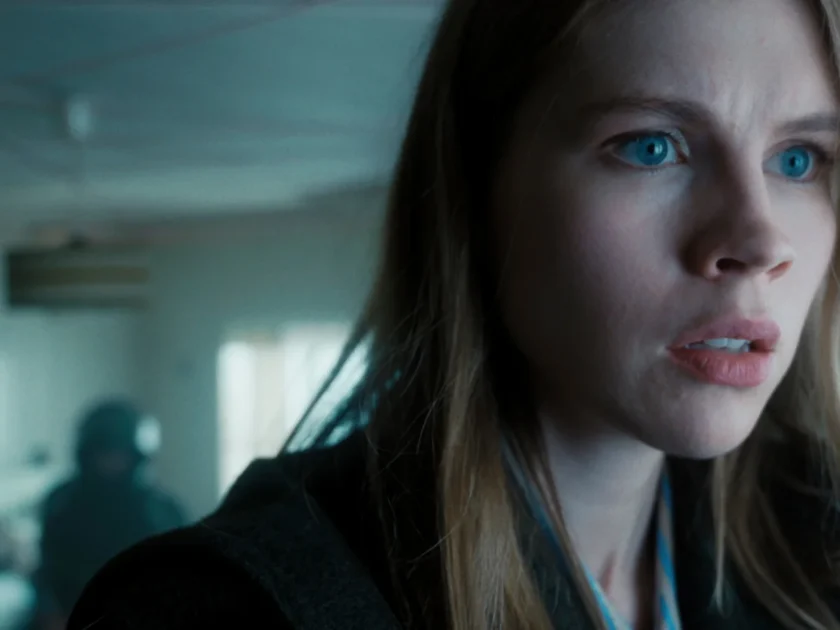
Films with a similar narrative structure to “Sew Torn”
- Run Lola Run (1998): It presents the same 20-minute scenario three times, with minor initial variations leading to drastically different outcomes. It shares the same “what if I had turned left instead of right” core idea as Sew Torn and explores the butterfly effect.
- Sliding Doors (1998): This film splits the narrative into two parallel timelines based on whether the main character catches a train or not. It explores two completely different life paths from that single pivotal moment.
- Mr. Nobody (2009): A complex film that explores multiple hypothetical timelines and the protagonist’s potential life choices. It uses non-linear narratives and alternate realities to question the nature of choice and fate.
- Cloud Atlas (2012): While much grander in scale, it interweaves six different storylines across different time periods. It often hints at cause and effect across lifetimes.
- A Nightmare on Elm Street covered Sew Torn at the premiere at SXSW, read about that here.
- If you love storylines that make you think about your choices in life, watch any of these: Dry Blood / Russian Doll / Unknown Number / The God Complex
“It’s as if Sliding Doors had a frenetic, bloody lovechild with Run Lola Run, all elevated by a MacGyver-esque mobile seamstress.”

Sew Torn Movie Ending Explained. Hit the Arrow for all the Answers
Do You Need Answers?
Unspooling the Endings: A Thread-by-Thread Breakdown
Alright, you’ve been warned. If you proceed, the film’s tightly wound secrets will unravel completely. We’re about to dissect Barbara’s choices and their meticulously crafted, chaotic consequences.
The “Perfect Crime” and “Drive Away” timelines, despite their wildly different setups of traps and tense standoffs, ultimately converge on a single, explosive point. In both scenarios, Barbara’s absurd ingenuity lands her the coveted suitcase. But here’s the devastating twist: it’s a Trojan horse. Hidden beneath the top layer of cash is a bomb, glimpsed for a split second when the helmeted goon, Beck (Thomas Douglas), checks the contents. In a moment of supreme irony, Barbara’s prize for survival is the very thing that obliterates her beloved shop, forcing the catharsis of letting go that she so desperately resisted.
The “Call Police” timeline demonstrates that even the ‘sensible’ choice is no escape. Barbara, the criminals, and the suitcase end up at the sheriff’s station. This leads to a comically brilliant escape attempt involving thread shot into a belt buckle to snag keys. However, the plan is foiled by a double-cross, leaving Barbara handcuffed and in a worse position than before. It’s a sharp commentary that in this world, even the ‘right’ choice leads down a rabbit hole of violence and betrayal.
The film’s final, ultimate ending rewinds past all of this. Before the crime scene is ever encountered, before she intentionally flicks the bride’s button down a grate. This act of petty rebellion means she never goes back to the shop. When she leaves to return to the Duggens’ shop, paid by a happy bride, she is flagged down by the crime boss, Hudson Armitage (John Lynch). He leans in, tells her, “You never saw anything,” and shoves wads of cash through her window. This is where the film’s airtight logic frays.
Hudson was en route to the crash site, where his son and the money were. It makes no narrative sense for him to be carrying huge stacks of hundreds to hand to a random motorist. It feels like a narrative cop-out that dilutes the potent, recurring theme that every choice has a perfectly tailored consequence. It’s a strangely neat bow on a story that was far more compelling when it was messy, tangled, and dangerous. But the film is still moreishly excellent
Sew Town
Director: Freddie McDonald
Date Created: 2025-03-11 16:23
4.5
