
Film Title: The Hand That Rocks the Cradle (Remake)
Cast: Mary Elizabeth Winstead, Maika Monroe, Raúl Castillo, Martin Starr, Mileiah Vega, Nora & Lola Contreras, Riki Lindhome, Shannon Cochran
Director: Michelle Garza Cervera
Writer: Micah Bloomberg
Distribution: Hulu (US) / Disney+ (International)
Production: 20th Century Studios, Department M, Radar Pictures
Release Date: October 22, 2025 (Hulu/Disney+)
Review by: Mother of Movies
This The Hand that Rocks the Cradle review dissects specific plot mechanics, character revelations, and the film’s climactic confrontation. If you prefer your psychological thrillers unspoiled, bookmark this and return after watching. Otherwise, welcome to the chaos. Is it better than the 1992 cult smash version?
A Remake Nobody Asked For, But Here We Are Anyway
Remaking The Hand That Rocks the Cradle in 2025 feels like reheating leftovers from 1992 and hoping the microwave adds something new. It doesn’t. Director Michelle Garza Cervera (Huesera: The Bone Woman) attempts to modernize Amanda Silver’s original story with updated anxieties, helicopter parenting, and mental health stigma. All while infiltrating domestic spaces. However, much of this modernization remain stubbornly familiar. What we get is a serviceable thriller that understands the assignment without ever exceeding it.
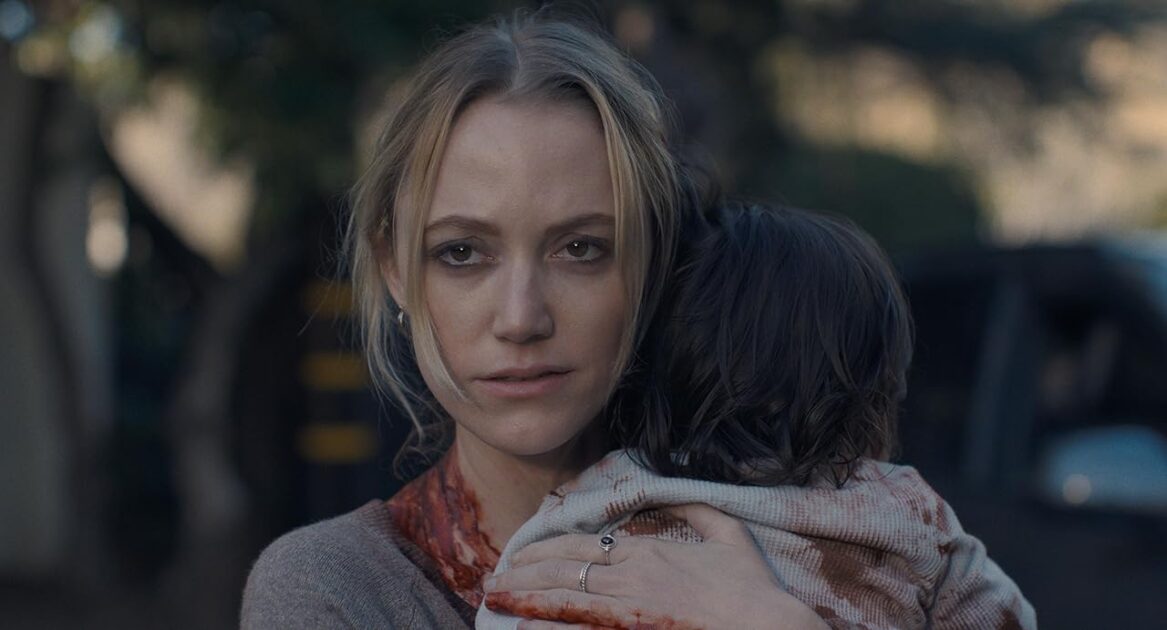
Mary Elizabeth Winstead plays Caitlyn Morales, a Los Angeles attorney juggling career ambitions, postpartum exhaustion, and an older daughter who treats emotional regulation like an optional hobby. When Polly Murphy (Maika Monroe) enters their lives, first as a client facing eviction, then as the family’s live-in nanny, the setup screams “red flag parade.” Polly is younger, prettier, more patient with the kids, and suspiciously eager to fold herself into the Morales household like she’s been studying their routines through binoculars.
The film leans hard into the paranoia that comes with handing your children to a stranger. As someone who couldn’t leave my kids with anyone until they could verbally confirm they hadn’t been locked in a closet all day, I felt that anxiety in my bones. Childcare is already a minefield of guilt, expense, and background checks that reveal nothing useful. Throwing a revenge-driven sociopath into the mix? That’s just Tuesday for working parents in 2025.
Polly’s Playbook: Sabotage with a Smile
Maika Monroe’s Polly wastes zero time establishing dominance. She gives the kids sugar behind Caitlyn’s back, bonds with them through conspiratorial finger-crossing rituals, and poisons the family’s seafood stew to make herself indispensable during their “mysterious” illness. It’s textbook infiltration, gain trust, exploit weaknesses, replace the original model. Monroe plays Polly with a glacial detachment that occasionally thaws into something resembling human emotion. Mostly though, she’s a walking embodiment of “trust no one hotter than you in your own home.”
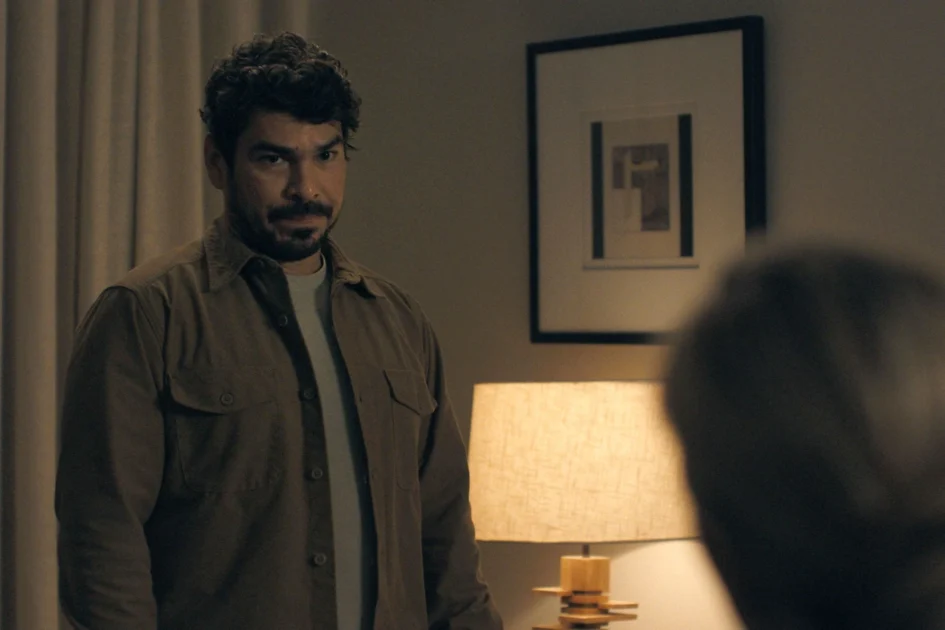
The film’s most insidious move is swapping Caitlyn’s mental health medication with methamphetamine tablets. Suddenly, her justified suspicions about Polly read as paranoia fueled by instability. Her husband Miguel (Raúl Castillo) dismisses her concerns, the kids prefer Polly’s permissive parenting. Caitlyn spirals into the nightmare every mother fears, being gaslit in her own house while everyone sides with the interloper.
Cervera stages these escalations with a camera that wants you to see all the hidden daggers. Close-ups of pills being switched, secrets with Emma at the park, Polly playing the seductress with Caitlyn’s husband. Each violation is small enough to deny but cumulative enough to suffocate. The cinematography by Jo Willems bathes everything in cold blues and grays, creating a sterile atmosphere where warmth feels like a distant memory. Ariel Marx’s score hums with dread, occasionally punctuated by whispered audio cues that felt more distracting than atmospheric. (Seriously, who approved those ASMR villainous whispers?)
The Twist: Revenge Served Cold, in The Hand that Rocks the Cradle
The film’s second half pivots into revenge thriller territory when we learn Polly’s real name is Rebecca, and Caitlyn is actually Jennifer. Jennifer, as a child, set fire to Rebecca’s home, killing her parents and infant sister. She was given witness protection and a fresh start. Rebecca got foster care, abuse, and a lifetime of trauma. Now she’s here to reclaim what was stolen: a family, a home, a life that doesn’t taste like ash.
This backstory reframes everything. Polly isn’t just a psychopath, she’s a victim weaponizing her pain. Caitlyn’s confession that she set the fire to escape sexual abuse from Polly’s father adds moral complexity, but the film doesn’t sit with it long enough to matter. Instead, it rushes toward a climactic knife fight, a car crash involving a conveniently placed stop sign (foreshadowed throughout the film in the most obvious way possible), and Polly’s death on the pavement.
The ending lands with a thud. Caitlyn survives, Miguel apologizes for doubting her, and life resumes. Except Emma now mimics Polly’s gestures and stories, suggesting the cycle of trauma will continue. It’s meant to be haunting but feels more like the film couldn’t decide between redemption and nihilism, so it chose both and satisfied neither.

Performances That Deserve Better Material
Winstead anchors the film with a performance that oscillates between frazzled desperation and steely resolve. She’s doing the heavy lifting here, making Caitlyn’s unraveling feel earned even when the script doesn’t support her. Monroe, meanwhile, plays Polly with the emotional range of a surveillance camera, cold, calculating, occasionally glitching into something resembling humanity. It works until it doesn’t. Her villain lacks the charisma that made Rebecca De Mornay’s original performance so chilling.
Castillo’s Miguel is the archetypal husband who believes his wife is “overreacting” until it’s too late. He’s not malicious, just oblivious, a character type that feels increasingly outdated in 2025 but somehow persists in thrillers like this. Martin Starr’s Stewart, the neighbor who investigates Polly’s past, exists solely to die after delivering crucial exposition. His death scene, bludgeoned with a baseball bat, is brutal but predictable.
When Remakes Forget Why the Original Worked
The 1992 Hand That Rocks the Cradle succeeded because it tapped into primal fears about home invasion and maternal inadequacy without overexplaining itself. This remake, by contrast, feels compelled to justify every beat. Why does Polly hate Caitlyn? Here’s a tragic backstory. Why doesn’t anyone believe Caitlyn? Mental health stigma and medication tampering. Why does the climax happen near a stop sign? Because we showed you that stop sign seventeen times earlier.
It’s a film that mistakes exposition for depth and coincidence for structure. The revelation that both women share a traumatic past should electrify the narrative, but instead it feels like a plot device borrowed from a different, more interesting movie. The original film didn’t need to explain why the nanny was evil, she just was, and that was terrifying. This version wants us to understand her, sympathize with her, and then watch her die anyway.
Filmmaker Stamps: Cervera’s Maternal Horror Meets Bloomberg’s Plot Holes
Michelle Garza Cervera made waves with Huesera: The Bone Woman (2022), a body-horror meditation on motherhood that didn’t flinch from depicting postpartum dread as literal monstrosity. Her visual language, claustrophobic framing, tactile discomfort, the way she shoots spaces like crime scenes, translates well here. But Huesera worked because it trusted its audience to sit with ambiguity. The Hand That Rocks the Cradle doesn’t afford her that luxury. The script, by Micah Bloomberg (a relative newcomer to feature screenwriting), leans too heavily on contrivance and telegraphed twists.
Mary Elizabeth Winstead has spent her career oscillating between genre fare (“10 Cloverfield Lane”, “Birds of Prey“) and indie dramas (“Smashed“, “Fargo Season 3″). She’s at her best when playing women who refuse to break even when the world insists they should. Maika Monroe, post -“It Follows“ and “Watcher”, has carved out a niche as the face of modern elevated horror. She is stoic, haunted, and perpetually on the edge of something terrible. Here, she’s miscast. Polly requires volatility, not inscrutability.
What the Internet Is Saying (And What It Should Be Saying)
Critical reception for The Hand that Rocks the Cradle has been lukewarm. Rotten Tomatoes hovers at 44% and Metacritic at 52. Most critics praised the performances while lamenting the film’s narrative redundancy. Some noted that production was briefly halted due to the Southern California wildfires in January 2025, which adds an eerie real-world echo to the film’s fire-based backstory.
What’s not being discussed enough is how this remake reflects our current cultural obsession with revisiting ’90s thrillers through a trauma-informed lens. Films like Fatal Attraction (2023) and Sleeping with the Enemy (reimagined as Enough in 2002, now being rebooted again) are getting the “but what if we explained the villain’s motivations?” treatment. It’s not always an improvement. Sometimes a villain is scarier when they’re just… villainous.
Competent Paranoia, Hollow Payoff
The Hand That Rocks the Cradle modernizes ’90s thriller tropes with trauma-informed backstory, but sacrifices the original’s primal terror for over-explanation. Winstead elevates every frame; Monroe chills without captivating. A remake that respects its source while forgetting why it scared us.
The Hand That Rocks the Cradle (2025) is streaming on:
“A remake that understands the assignment without ever exceeding it, Winstead does miracles with material that forgets why the original terrified us.”
Quote – Mother of Movies
Need More Domestic Invasion Dread? Watch These Films with Common Themes to The Hand thtt Rocks the Cradle 2025:
The Nanny (2022) – Nikyatu Jusu’s Sundance winner blends folklore and immigrant exploitation into a slow-burn nightmare about childcare as psychological warfare.
Swallow (2019) – Haley Bennett’s housewife develops pica as rebellion against domestic suffocation; body horror meets suburban entrapment.
Maid (Netflix, 2021) – Not a thriller, but Margaret Qualley’s fight to escape abuse while navigating childcare bureaucracy hits harder than most horror films.
The Invisible Man (2020) – Elisabeth Moss gaslit by an abusive ex with tech, domestic terror elevated by Leigh Whannell’s taut direction.
Fatal Attraction opted out of a remake and instead made a TV series that finishes the story. Dan Gallagher is fresh out of prison.
Finding Nicole (2025) – Domestic violence told through director Harvey Wallens’ lense.
A Streetcar Names Desire – From the Stage of the National Theatre Live, watch this classic story in a different way.
The Hand that Rocks the Cradle

Director: Michelle Garza Cervera
Date Created: 2025-10-22 21:25
3
