
The paranormal investigation genre has been circling the same drain for years, shaky cameras, jump scares that land like wet fish, and protagonists who make decisions that would get them voted off a desert island. Shelby Oaks doesn’t just sidestep these tropes; it dismantles them methodically, building something genuinely unsettling in their place.
Distributed by Neon (the studio behind Hereditary, Midsommar, and The Green Knight), Shelby Oaks arrives as a found-footage horror film that refuses to play by the rulebook. Written and directed by Chris Stuckmann, a filmmaker who built his reputation on film criticism before transitioning to directing, this is a work that understands the mechanics of dread and deploys them with surgical precision.
If you’ve seen Shelby Oaks and are looking for answers, Mother of Movies explains it all in a spoiler article.
This review keeps the ending mysteries intact. You’re safe to read ahead without discovering what lies at Shelby Oaks—or what follows those who find it.
The film opens with a missing-person case. Riley Brennan, a paranormal content creator, vanishes during a livestream investigation at an abandoned fairground. What follows isn’t a straightforward search narrative. Instead, director Stuckmann weaves together interview footage, archival clips, detective briefings, and recovered tapes into a tapestry that slowly reveals something far darker than a simple disappearance.
The Narrative Architecture
The genius of Shelby Oaks lies in its structure. Rather than thrusting us directly into found footage chaos, the film uses interviews with Riley’s sister Mia (Camille Sullivan) as an anchor. We learn about Riley through Mia’s recollections, her artistic sensibilities, her sensitivity to the supernatural, and her childhood night terrors. This approach, borrowed from true-crime documentary language, creates genuine emotional investment before the horror elements fully materialize. It’s the opposite of the typical found-footage trap, where audiences are asked to care about cardboard cutouts in real time.
The detective angle, handled by a weary investigator who’s spent years chasing leads that evaporate, adds institutional skepticism. When he describes watching footage “500 times,” searching for details others missed, we feel the exhaustion of institutional failure. This is the machinery of law enforcement grinding against something it can’t categorize or prosecute.
Craft and Composition
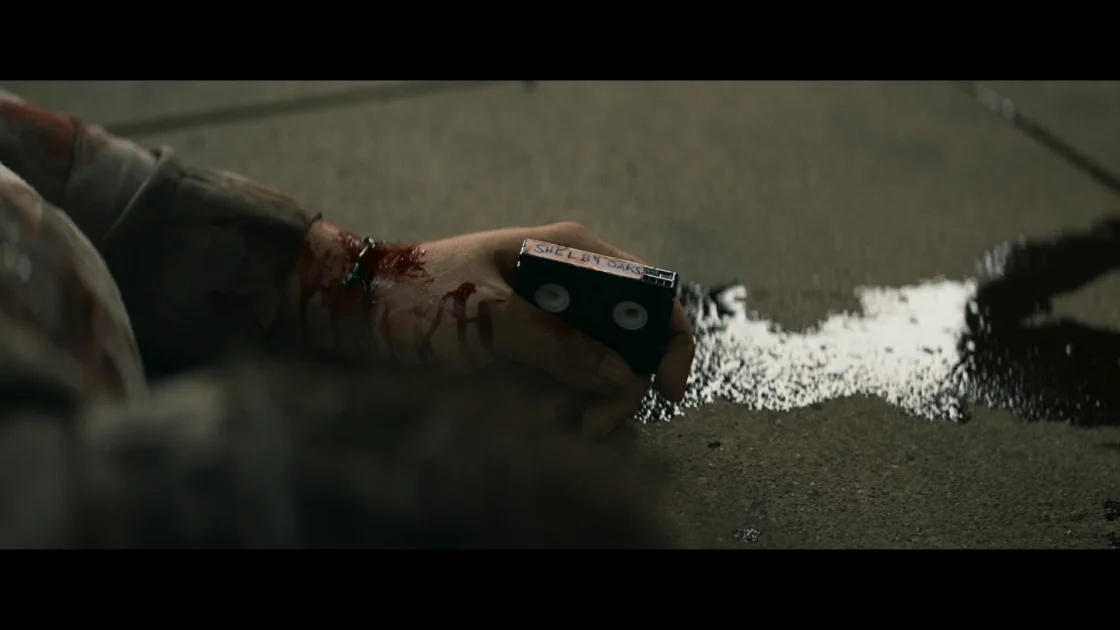
What sets Shelby Oaks apart from its found-footage peers is its refusal to rely on aesthetic laziness. The cinematography, whether in the interview segments or the recovered footage, demonstrates intentional framing and lighting choices. There’s a scene early in the film involving a sudden, violent moment that’s handled with remarkable restraint. Rather than leaning into gore or off-screen kills, the filmmakers use strategic lighting and editing to convey trauma without exploiting it. The emotional truth of the moment lands harder because of what we don’t see, not despite it.
The sound design deserves specific mention. Ambient drones, distant growls, and the unsettling silence of abandoned spaces create a suffocating atmosphere. There’s no bombastic score here, just the sound of a world that feels fundamentally wrong. When the film does introduce musical elements, they’re sparse and deliberately dissonant.
Performance and Presence
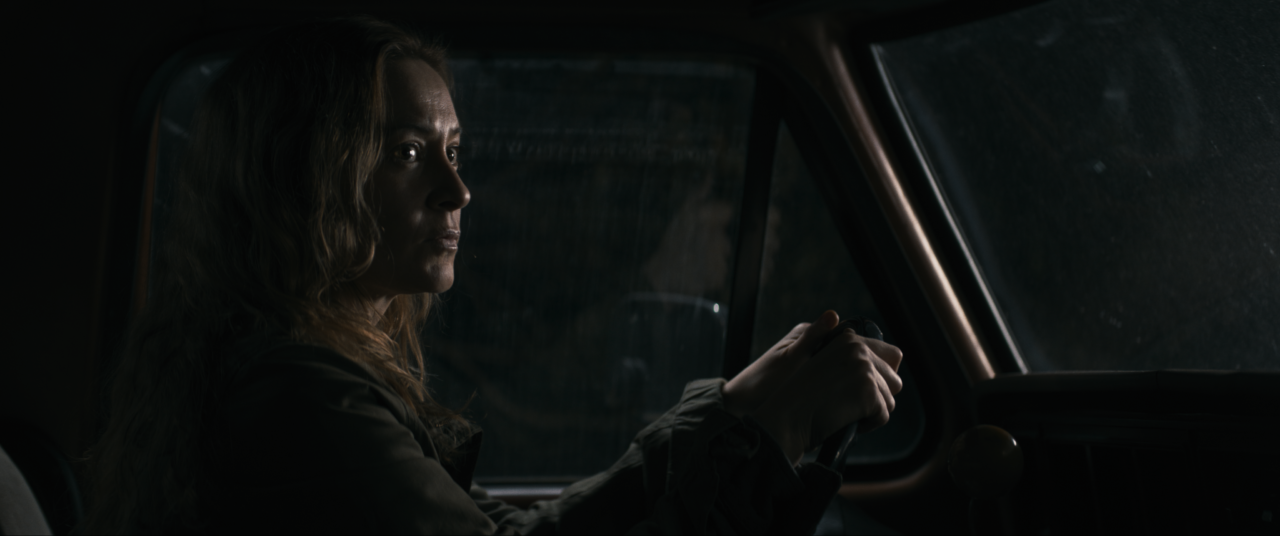
Camille Sullivan carries the film with a performance that oscillates between sisterly devotion and creeping obsession. Her Mia begins as a grieving sibling seeking answers and gradually transforms into something more complex. Someone willing to bend rules, withhold evidence, and venture into genuine danger for the possibility of reunion. Sullivan doesn’t oversell this transformation; it emerges through micro-expressions and tonal shifts.
Sarah Durn, seen primarily through recovered footage and archival clips, creates a haunting portrait of Riley through limited screen time. I love how the film builds sympathy for a character we meet mostly through video recordings and other people’s memories. By the time we see Riley’s direct perspective, the emotional groundwork has been laid so thoroughly that her vulnerability reads as tragic rather than exploitative.
Brendan Sexton III, as Mia’s husband Robert, serves as the voice of reason, and his gradual marginalization from Mia’s quest mirrors the way grief can isolate people from those closest to them.
The Supernatural Element
Without venturing into spoiler territory, the film’s approach to the supernatural distinguishes it from both traditional hauntings and demonic-possession narratives. There’s an intelligence to whatever exists at Shelby Oaks. Something that doesn’t just kill indiscriminately but seems to have purpose and design. The mythology unfolds gradually through visual clues, recovered documentation, and historical research rather than exposition dumps.
The film references paranormal investigation as a cultural phenomenon. The way social media has turned ghost hunting into content creation, and the blurred line between genuine belief and performative entertainment. This meta-awareness never becomes preachy. It’s woven into the fabric of why these characters are at Shelby Oaks in the first place.
Where It Falters
Shelby Oaks isn’t without moments that strain credulity. There’s a sequence involving a torch losing power that plays on found-footage conventions so directly that it borders on self-parody. A few plot developments require characters to make decisions that feel motivated more by narrative necessity than psychological logic. These aren’t fatal flaws; the film’s strengths far outweigh its stumbles, but they’re noticeable enough to prevent this from reaching absolute perfection.
The pacing occasionally stutters in the middle section, where exposition-heavy sequences threaten to derail momentum. A tighter edit might have shaved ten minutes and maintained tension more consistently.
Why the Shelby Oaks Film Matters
Shelby Oaks arrives at a moment when found-footage horror has become almost moribund in mainstream cinema. The genre’s reliance on jump scares and incompetent protagonists has calcified into cliché. What Stuckmann demonstrates here is that the found-footage framework, the limitation of perspective, the fragmentation of narrative, and the ambiguity of what’s real. It remains a potent tool when wielded by someone who understands psychological horror.
This is a film that trusts its audience. It doesn’t explain everything. It doesn’t resolve every question. It builds dread through implication. In an era of horror films that mistake loudness for intensity, Shelby Oaks whispers and lets the silence do the heavy lifting.
The comparison to the Blair Witch Project feels inevitable. Both films use found footage to create a sense of being lost in a space that doesn’t want you there. But Shelby Oaks adds layers of family trauma, institutional failure, and supernatural mythology that give it additional weight.
Final Thoughts
It’s the kind of film that improves with reflection. Details that seem incidental on first viewing take on deeper resonance once you understand the full scope of what’s happening. It’s a film designed for repeat viewings, for pausing on details, for discussion and debate about what was real and what was supernatural manipulation.
It’s also a film that understands that the scariest thing isn’t what jumps at you from the dark. It’s the slow realization that someone you love might be lost in ways that can’t be recovered. That grief and obsession can make us complicit in things we don’t fully understand. That sometimes the people closest to us are the ones we understand least.
For those who appreciate horror that builds from character and mythology rather than jump scares, Shelby Oaks is essential viewing. It’s a reminder that found footage, when executed with intelligence and restraint, remains one of cinema’s most effective tools for generating genuine unease.
Shelby Oaks is rated
4.5 Excellently filmed kill shots out of 5
Verdict & Rating
Found Footage Perfected
Shelby Oaks proves that found-footage horror doesn’t need jump scares or shaky-cam chaos to terrify. Stuckmann crafts a methodical descent into dread where what you don’t see proves far more unsettling than any gore. Camille Sullivan’s performance anchors a narrative that weaponizes grief and obsession, while the film’s supernatural mythology unfolds with genuine intelligence.
Filmmaker Stamp
Chris Stuckmann represents a new wave of filmmakers transitioning from film criticism to directorial work. Before helming Shelby Oaks, Stuckmann built a substantial following on YouTube analyzing cinema, a background that informs his approach to horror. Rather than relying on visceral shock, his work emphasizes narrative structure, thematic coherence, and the mechanics of audience manipulation. Shelby Oaks demonstrates a filmmaker who understands not just why certain techniques work, but how to deploy them with precision. This is his directorial feature debut, and it announces him as a voice worth following in the horror space.
Similar Titles to Shelby Oaks (Found Footage or the Supernatural)
Need more atmospheric paranormal mysteries? These films capture similar themes of obsession, supernatural dread, or found-footage innovation:
The Blair Witch Project (1999): The foundational text for found-footage horror. Like Shelby Oaks, it builds dread through absence and implication rather than spectacle.
Hereditary (2018): Also distributed by Neon. Family trauma as supernatural catalyst; grief weaponized into horror. Ari Aster’s precision mirrors Stuckmann’s restraint.
Host (2020): Pandemic-era found-footage that uses Zoom calls as its framework. Claustrophobic, inventive, and deeply unsettling without relying on gore.
Paranormal Activity (2007): The film that revitalized found-footage horror. Like Shelby Oaks, it understands that what’s implied terrifies more than what’s shown.
Neon Horror Films Supernatural Mystery 2026 Streaming Options
“Shelby Oaks proves that found-footage horror doesn’t need jump scares or shaky-cam chaos to terrify. What you don’t see proves far more unsettling than any gore.” — Mother of Movies
– Mother of Movies
Shelby Oaks 2025 (Found Footage Horror) is streaming on:
Host is streaming on:
“You should be so proud of her.”
Tagline for Shelby Oaks Movie
Shelby Oaks
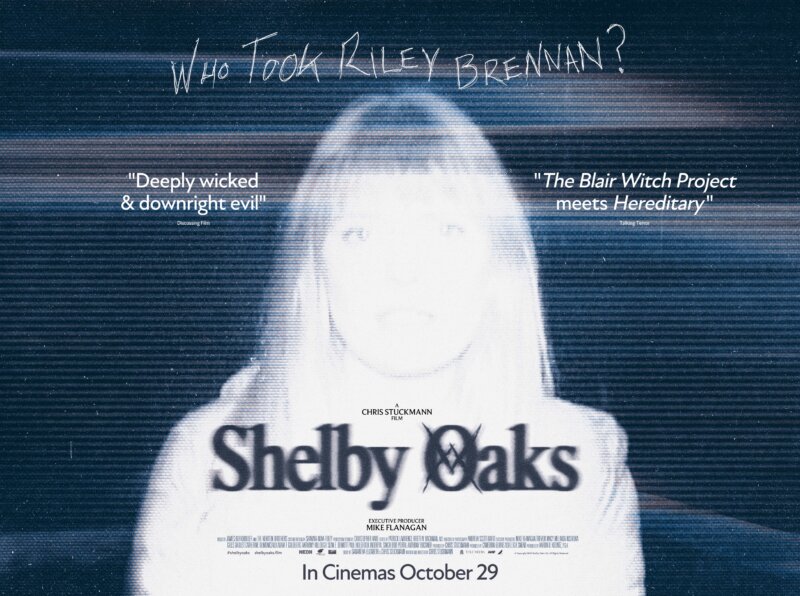
Director: Chris Stuckmann
Date Created: 2024-07-20 15:27
4.5
