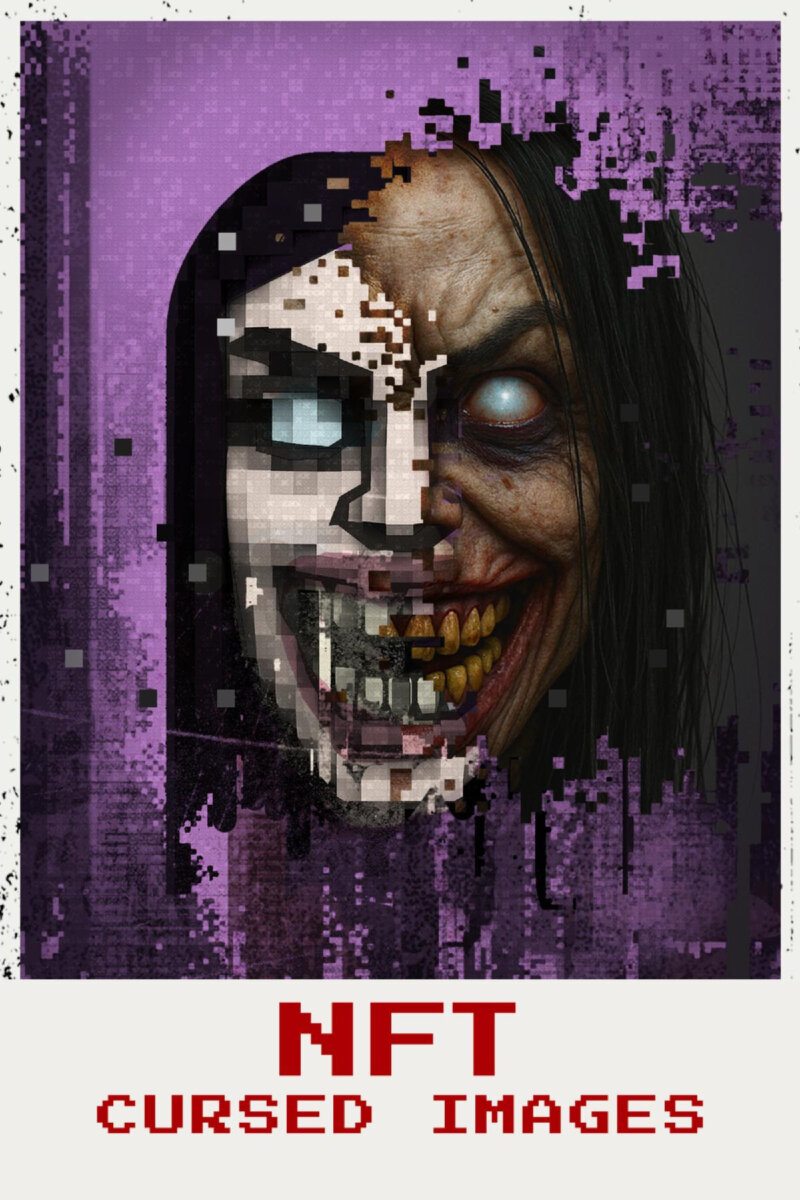
Film Title: NFT: Cursed Images 2026
Cast: Najarra Townsend, Mariah Nonnemacher, Amelie Edwards, Patrick Shearer, Charlie Rich, David Wayman, Durassie Kiangangu, Nobuse Jnr, Jasmine Clark
Director/Writer: Jonas Odenheimer
Distribution: Old Jim Productions
Production: Old Jim Productions
Release Date: March 6, 2026
Review by: Mother of Movies
This review contains detailed plot points and discusses the film’s conclusion. If you prefer your cursed crypto art unspoiled, bookmark this for later, though honestly, the lore breaks itself anyway.
When Your Investment Strategy Becomes a Death Sentence
Released to digital platforms in March 2026, NFT: Cursed Images attempts to merge cryptocurrency culture with supernatural horror, positioning itself as “gateway horror for younger audiences.” The film’s marketing campaign included an interactive element where the first 6,666 scanners could claim limited edition NFT art featuring creatures from the movie, a clever hook that unfortunately promises more innovation than the 111-minute feature delivers.
Writer-director Jonas Odenheimer opens with a traditional setup: a couple walking home after dark in London. Sue (Najarra Townsend) is convinced she’s encountered cursed art, while Mark (Charlie Rich) insists on taking a shortcut. Within moments, Mark vanishes, reduced to nothing but a shoe, and Sue is left screaming at something unseen. It’s an effective cold open that establishes the film’s central threat, even if the execution feels a little underwhelming rather than chilling.
Crypto Bros Meet Creature Features
The narrative shifts to a group of seven friends crammed into what appears to be an apartment lounge, drinking from red plastic cups while discussing their cryptocurrency windfalls. Here’s where NFT: Cursed Images stumbles out of the gate. The film dedicates substantial runtime to explaining blockchain technology, NFT trading, and crypto wallets to an audience that either already understands these concepts or has deliberately avoided them. The educational approach transforms what should be mounting dread into something resembling a financial literacy seminar.
Kit (Patrick Shearer) and Sarah (Amelie Edwards) lead the crypto-savvy contingent, while James (David Wayman) remains skeptical, particularly after his ex-girlfriend Cass (Mariah Nonnemacher) shows unexpected enthusiasm for digital assets. Dan (Durassie Kiangangu) struggles to keep pace with his friends’ investments, leading him to offload some NFT art to James, who reluctantly enters the market to avoid missing out. It’s a scenario that mirrors real-world FOMO culture, but Odenheimer’s dialogue feels more instructional than organic.
The Curse Mechanics and Missed Opportunities
When Kit receives seven free images from an unknown address, a collection called “Crypto Horrors”, the supernatural elements finally engage. Sarah explains the “real cursed images” story doing the rounds that get airdropped to victims. After that, they face dire consequences. Digital possession in an age of virtual ownership, where your assets can literally kill you.
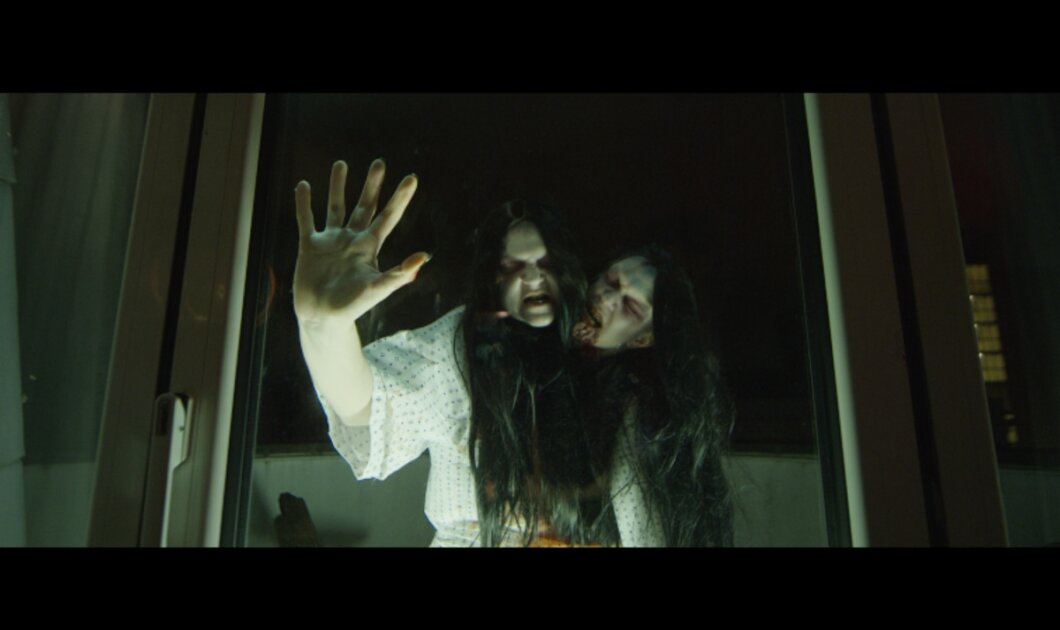
The film’s creature designs are okay, if not a little simple. Each friend receives a unique NFT that manifests as their personal demon. Effects deserve recognition; these aren’t groundbreaking, but they’re serviceable enough to create visual interest. Kit’s creature, glimpsed behind him as he doomscrolls in bed, stretches and screams with unsettling physicality. The cinematography captures London’s darkened streets and apartment corridors effectively, particularly in the claustrophobic elevator sequences.
Where the Blockchain Breaks Down
NFT: Cursed Images suffers from fundamental structural issues that undermine its premise. The sound mixing remains problematic throughout, requiring maximum volume to catch muffled dialogue, a technical shortcoming that distances it from the escalating tension. The framing choices, particularly that opening lounge scene with seven people squeezed onto one couch, the floor, and two chairs, create discomfort that feels unintentional rather than atmospheric.
More critically, the film’s internal logic collapses. Dan discovers through podcast research that transferring the cursed NFT saves the current owner, or that certain acts can banish them completely. He explains his theory to James. This leads to a climactic moment where he shouts at his attacking creature that he’s “protected by a circle”, then promptly runs out of it. He’s saved when someone purchases his image, creating a brief respite. This should establish clear rules: transfer the curse, or brandish the action, and survive the night. Instead, when James is attacked, he sends his NFT back to Dan, dooming him once again in a moment that plays more comedic than tragic.
The finale abandons its established mythology entirely. James believes Cass is at her apartment, but finds an imposter. While the real Cass is at Sarah’s place. Sarah reveals she’s already dead and kills the real Cass. Of course, supernatural Cass then kills James. The film opts for total annihilation over resolution, no survivors, no clever exploitation of the transfer mechanic, just a nihilistic endpoint that feels less like cosmic horror and more like narrative exhaustion.
Gateway to What, Exactly?
The “gateway horror” label raises questions about NFT: Cursed Images’ intended audience. The cryptocurrency focus skews toward viewers in their twenties and thirties. Meanwhile, the film’s restrained violence (beheadings occur off-screen, kills happen without elaborate gore) and PG-13 signals might appeal to younger viewers who can’t access the crypto wallets central to the plot. It’s a bit of a mismatch between concept and execution.
Performance-wise, the cast delivers. Najarra Townsend’s Sue shows genuine fear in the opening, while Amelie Edwards brings enthusiasm to Sarah’s crypto-obsessed character. David Wayman’s James struggles with emotional authenticity. A moment of grief features a visible tear that reads more like applied glycerin than genuine sorrow, suggesting either directorial choices or performance limitations.
Technical Craft and Aesthetic Choices
The London locations provide atmospheric potential, darkened streets, brutalist apartment complexes, and fluorescent-lit corridors, but the film rarely exploits these settings for maximum dread. The creature reveals favor quick cuts over sustained tension, a choice that protects the effects budget while sacrificing any visual flair.
The score remains forgettable, neither enhancing suspense nor establishing memorable motifs. In an era where horror soundtracks from Hereditary to It Follows have become cultural touchstones, NFT: Cursed Images opts for generic tension cues that could soundtrack any streaming thriller. The loungeroom scene in particular, which features seven friends drinking well into the night, had an annoying looping tune. This isn’t necessarily fatal; plenty of effective horror operates with minimal musical intervention. However, combined with the flat sound mix, it creates an overall sonic landscape that feels unfinished.
The Crypto Commentary That Wasn’t
There’s an intriguing film buried somewhere in NFT: Cursed Images’ premise: a horror story about digital ownership, speculative bubbles, and the very real fear of losing everything to invisible market forces. The NFT boom of the early 2020s left countless investors holding worthless assets. A modern curse that required no supernatural intervention. Odenheimer gestures toward this metaphor, your investments literally killing you, but never develops the satirical edge needed to make it resonate.
Instead, the film treats cryptocurrency as window dressing, a trendy hook to differentiate itself from standard supernatural fare. The result feels dated before release, particularly as NFT markets have cooled considerably since their 2021 peak. By March 2026, the cultural moment has largely passed, making the film’s educational approach feel like explaining Beanie Babies to a generation that’s moved on to the next trending frenzy.
Crypto Confusion Meets Creature Feature
NFT: Cursed Images wants to be a cautionary tale about digital obsession but gets lost explaining blockchain to an audience that either gets it or doesn’t care. The creatures show promise, but muddy sound and collapsing internal logic drain the scares.
NFT: Cursed Images is rated
2 Cursed crypto wallets out of 5
NFT Cursed Images (2026) is streaming on:

When streaming options are available in your city, they will appear here
Filmmaker’s Corner: Jonas Odenheimer
Jonas Odenheimer makes his feature directorial debut with NFT: Cursed Images, handling both writing and directing duties.
Did You Love NFT: Cursed Images? Watch These Similar Titles:
Countdown (2019) – An app predicts your death in this high-concept horror that similarly struggles to make digital threats genuinely frightening, but delivers more consistent scares.
Friend Request (2016) – Social media curses claim victims in this German horror that understands online obsession better than most, even if it can’t escape familiar beats.
Unfriended 2 (2014) – The screen-life horror that proved digital-age terror could work when committed to its gimmick, making cursed Skype calls actually unnerving.
Pulse (2001) – Kiyoshi Kurosawa’s masterpiece about internet ghosts remains the gold standard for technology-based horror, trading jump scares for existential dread.
Ringu (1998) – The original cursed media horror that spawned countless imitators, proving that simple rules (watch the tape, die in seven days) create more tension than complex crypto mechanics.